
Turn your entire compressed air station into a measurable digital asset
Connect existing units with zero production downtime, save a typical 5–15% with narrow-band scheduling, and recover the investment in 3–9 months — all covered by one MS master control system.
- ConnectMulti-brand direct acquisition / zero downtime
- SaveNarrow-band scheduling / typical 5–15%
- PredictAir demand forecasting / early warning
Compressed air: the most expensive "fourth utility" — and the easiest to waste
Ranked alongside water, electricity, and gas as the "fourth utility", it is also the least efficient system — much of the electrical energy ends up as heat and leakage instead of useful work. The problems typically cluster in three places: no visibility, no savings, no timely maintenance.
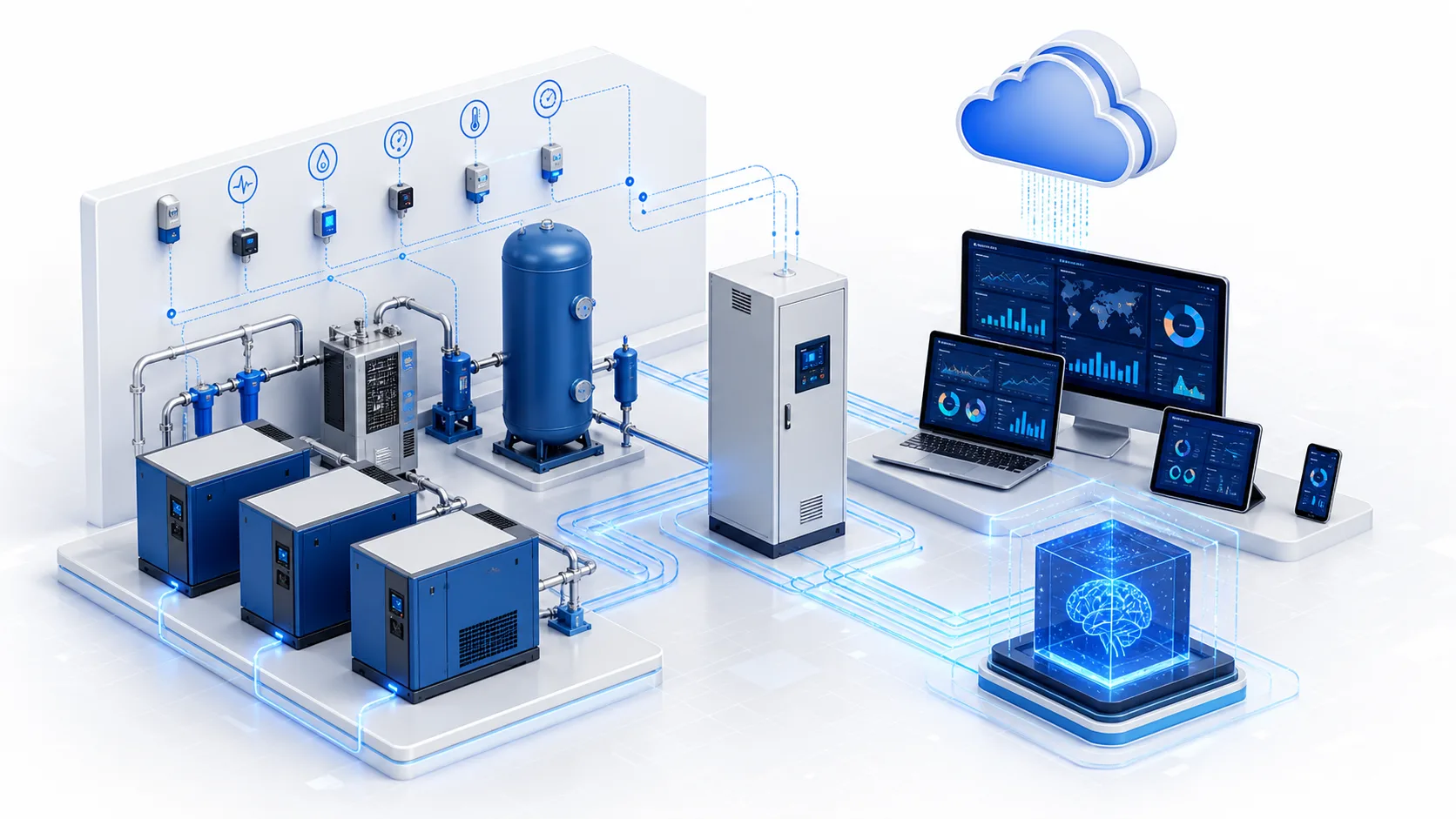
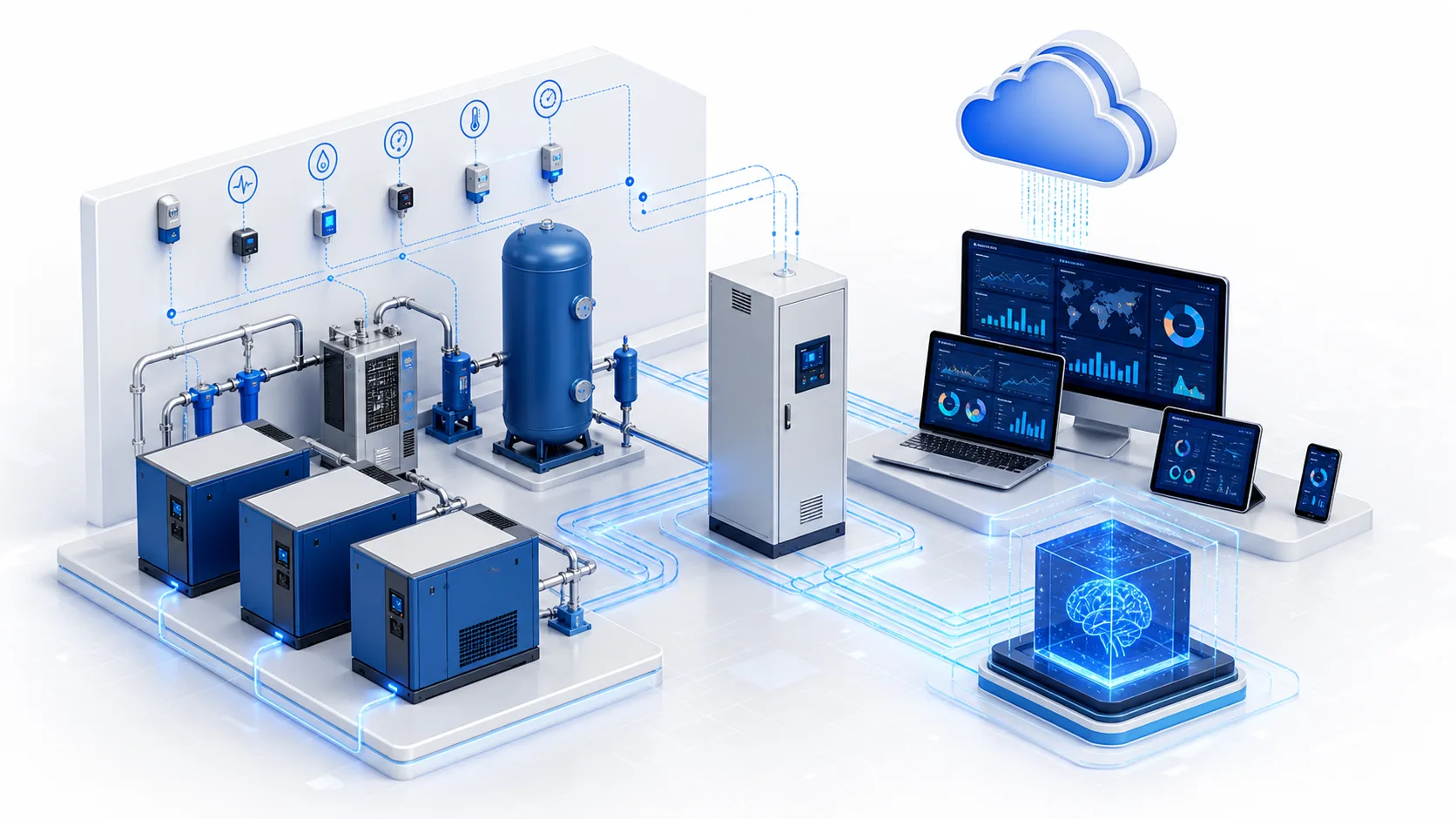
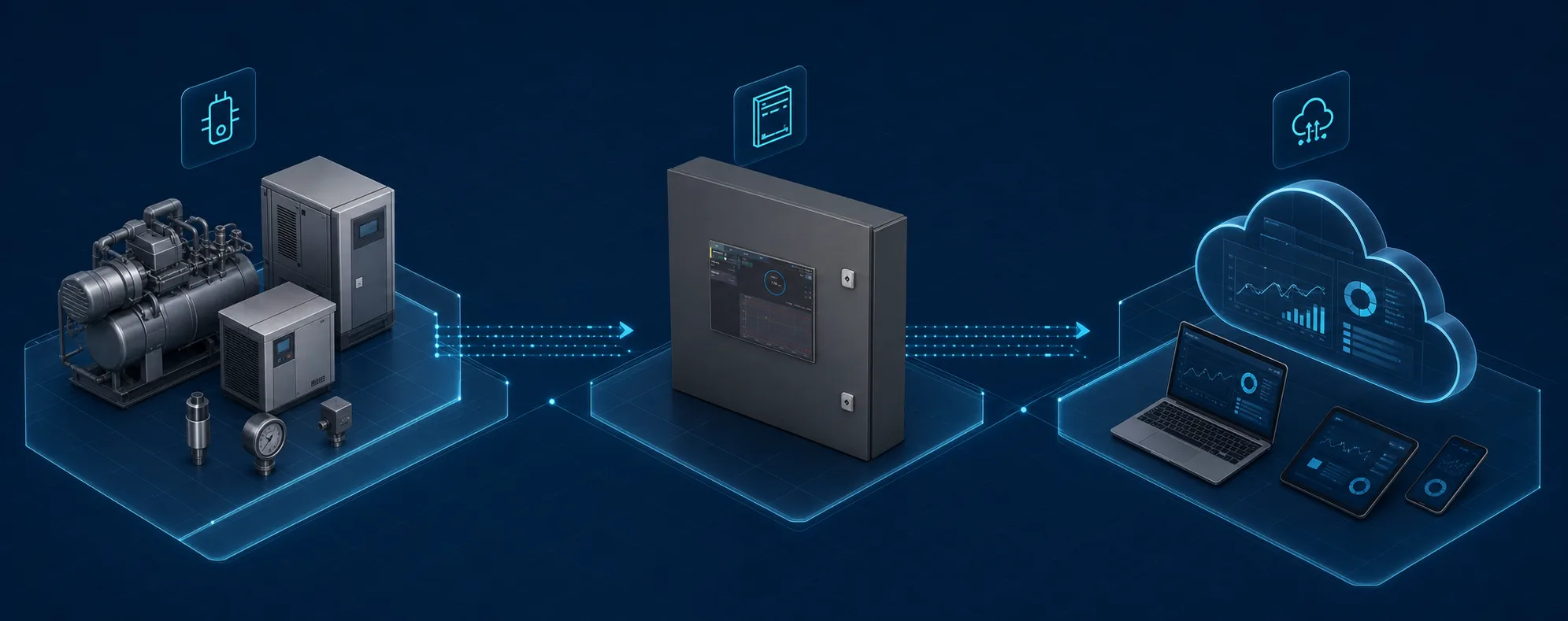
Device, edge, and cloud as one system — each problem solved at its root
On-site acquisition and control, real-time decisions in the edge cabinet, continuous optimization and analytics in the cloud — three layers working together, running stably even offline, with data flowing all the way up. Rollout follows a four-step closed loop, then the three chapters below unpack each part.
The energy efficiency loop: aligned with ISO 50001, so savings last
Energy savings are not a one-off retrofit — they come from turning "establish baseline → optimize → monitor continuously" into a cycle. MS backs every step of your energy management system with data.
On-site diagnosis
Measure electricity, air demand, pressure, and dew point to build a true energy profile of the station and pinpoint losses such as leakage and over-pressure.
Establish the baseline
Set the energy baseline and specific power metric (electricity used per cubic meter of air produced) in line with ISO 50001, as the quantitative benchmark for retrofit results.
Deploy and optimize
The MS master control goes live: narrow-band scheduling + coordinated speed regulation of VSD units + AI optimization move the station into unattended automatic operation.
Monitor continuously
Energy reports are generated automatically and compared against the baseline, continuously surfacing new optimization opportunities to close the improvement loop.
 01 · ConnectSolves · No visibility
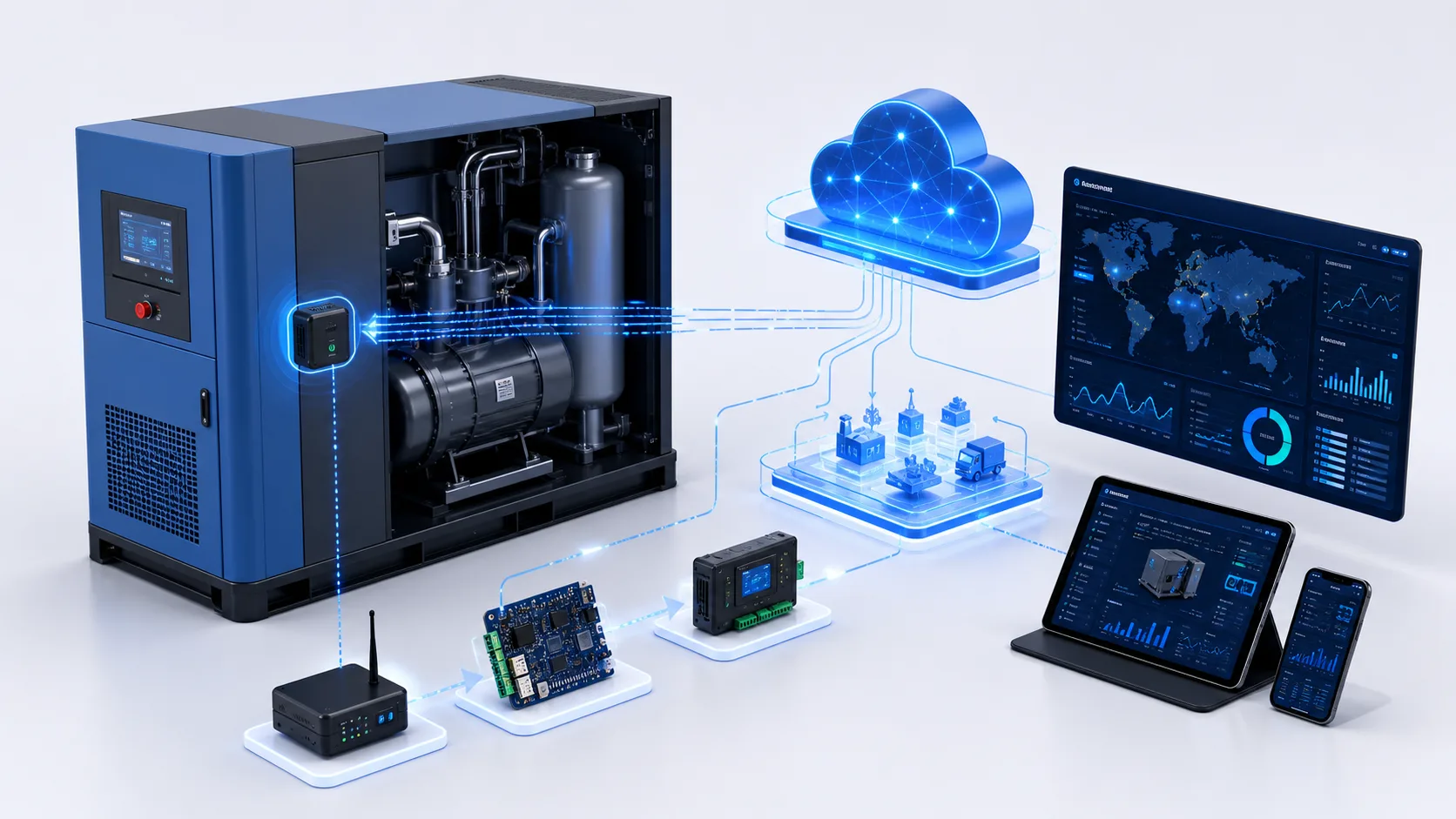
Multi-brand compatible — connect existing stations with zero production downtime
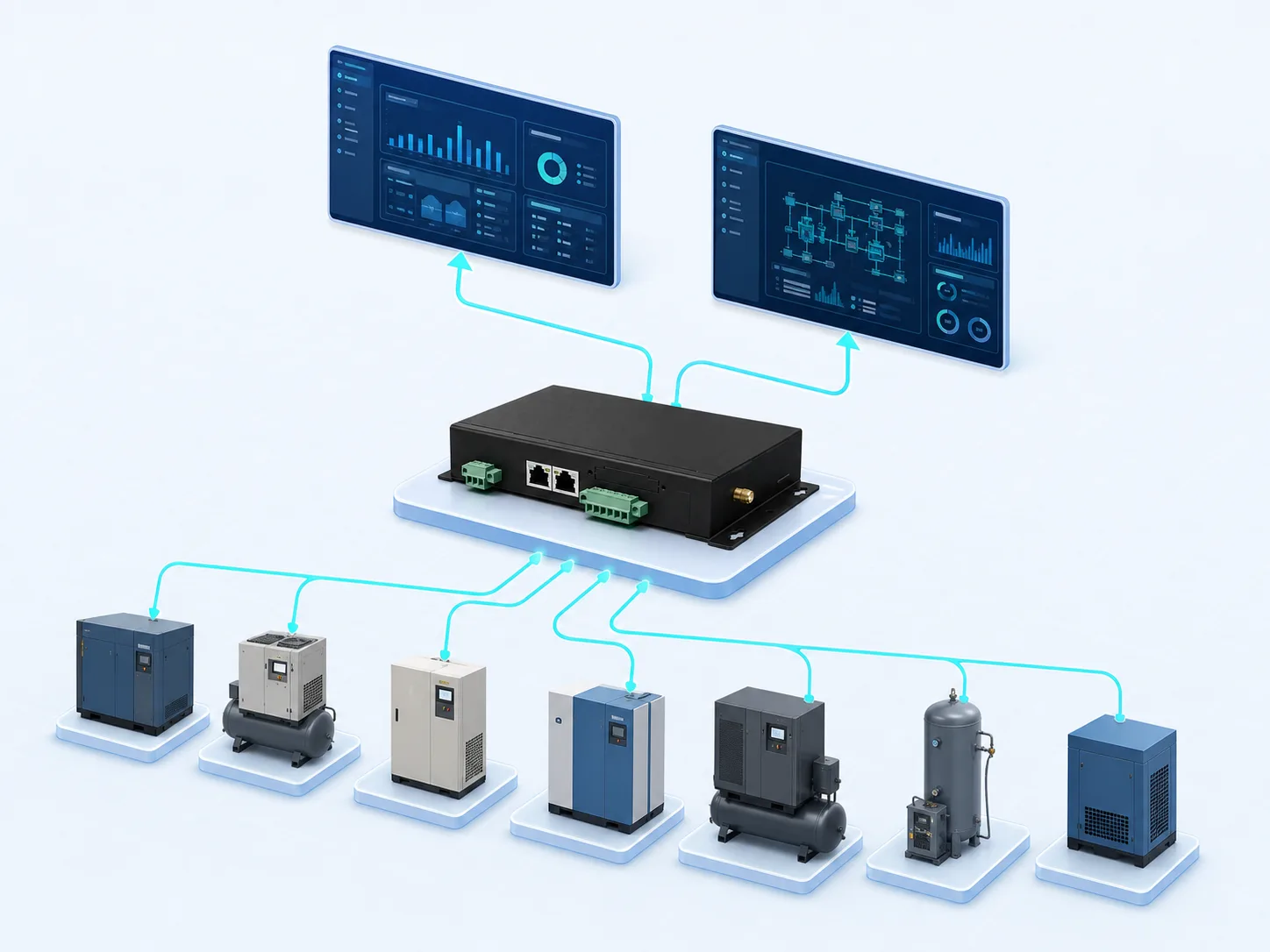
- ·Direct acquisition from major brands — Mainstream controllers such as Atlas Copco MK4 / MK5 are read directly over the CAN bus; screw and centrifugal compressors and any brand with a Modbus interface can be connected, with no modification to existing units.
- ·Two-way protocol integration — Standard protocols expose data services outward, connecting upward to MES / SCADA / energy platforms.
- ·Auxiliary equipment managed too — Refrigerated and desiccant dryers are controlled in coordination with the compressors, and data from flow meters, power meters, and dew point sensors can be collected.
- ·Bypass installation, production untouched — The master control runs in parallel with the original system; on any fault, control is handed back to the original system first, so normal operation is never affected.
 02 · SaveSolves · No savings
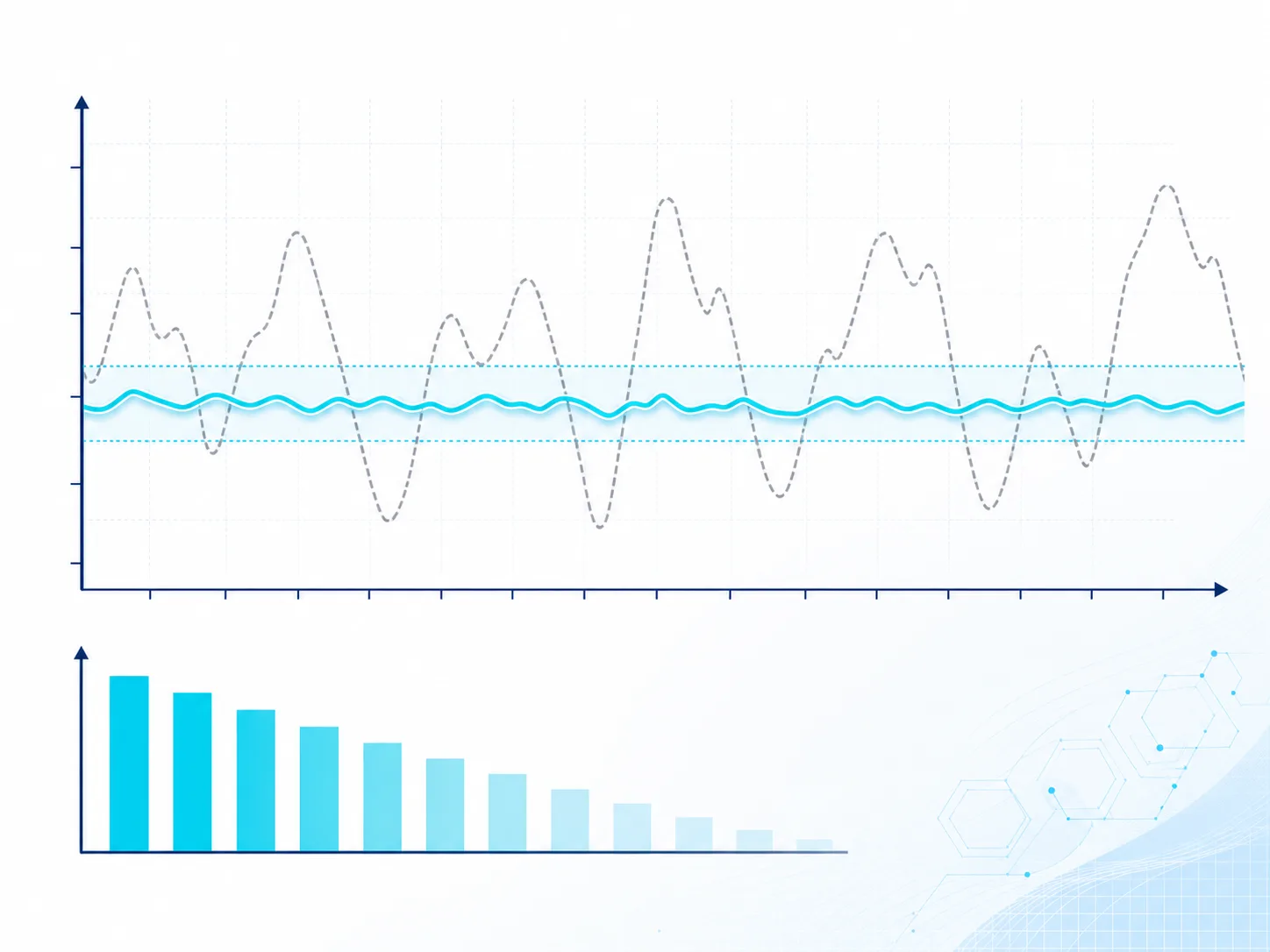
Start and stop on demand — hold pressure lower and steadier
The MAX-SAVING narrow-band control algorithm matches the compressor mix to real-time air demand and responds ahead of it, holding system pressure within a narrower, lower band. It coordinates the running frequency of up to 16 VSD units, uses the pipe network's own storage volume to absorb short-term fluctuations, and balances load between centrifugal and screw compressors.
Three built-in control modes — sequenced start/stop, energy optimization, and balanced running hours — switchable by season and shift, with equipment group management. See all three modes on the MS Series page →
 03 · PredictSolves · Too late to fix
Teach your compressed air station to think
Connectivity makes the station visible; energy control keeps it in check. Once data reaches the cloud and is continuously learned from, CompAI forecasts air demand, optimizes efficiency, and diagnoses equipment health — warning before failures happen. This is what separates a smart compressed air station from traditional master control.
From reviewing reports after the fact to making decisions ahead of time
Traditional master control loads and unloads by fixed rules and can only react. CompAI fuses station-wide pressure, flow, power, and dew point into one real-time picture, uses historical patterns to anticipate what comes next, and grounds every dispatch decision in data.
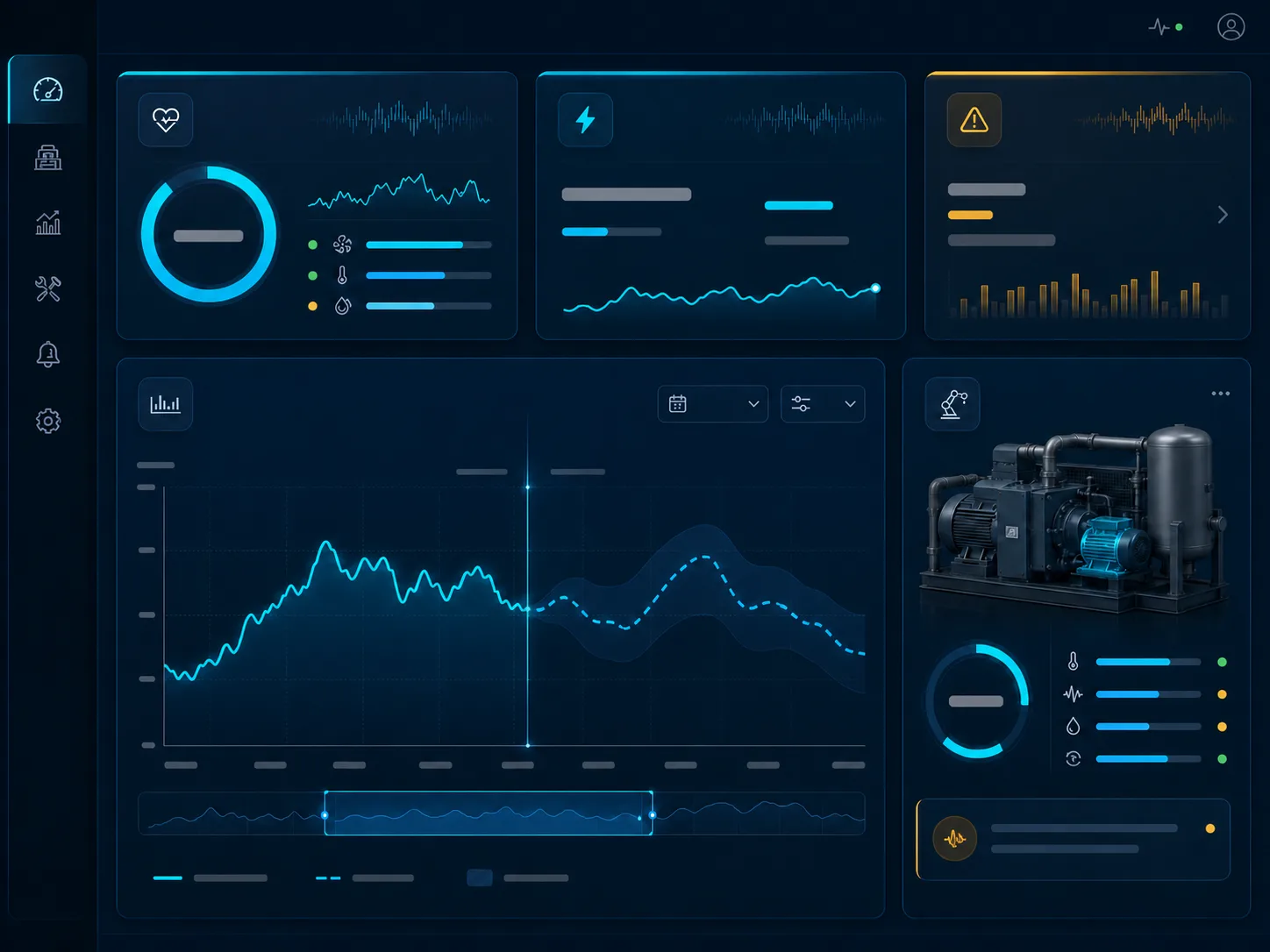
CompAI air demand forecasting
Learns historical usage patterns and forecasts the demand curve ahead, so the compressor mix switches before demand does — fewer load/unload cycles and pressure swings, steadier supply, lower losses.
Global efficiency optimization
The cloud periodically computes the optimal compressor mix and pressure setpoints to avoid multiple units idling at low frequency. Across multiple stations, it also evens out pressure imbalances between them, driving the system toward its minimum specific power.

Predictive maintenance
Assesses equipment health from operating data and gives early warning of degradation in bearings, oil filters, and belts — turning unplanned downtime into scheduled service.

Leak and anomaly detection
Automatically compares pressure, flow, and current against baselines to detect pipeline leaks and abnormal operating conditions — and traces them to the unit.
The result: a compressed air station that saves money on its own
With the three pain points resolved one by one, the station goes from opaque, wasteful, and reactive to visible, measurable, and controllable — and the closed loop plus a reliable foundation keep the results coming over the long term.
Typical range for master control + AI optimization
Plus roughly 13% less pipeline leakage
Typical payback for an energy retrofit
The station runs automatically, with remote control anytime
Energy savings never come at the cost of reliability
Every energy-saving function runs on the same reliable foundation. Every layer of MS is designed around one bottom line: on any fault, hand control back to the original system immediately.
Control fallback on faults
On a communication or mechanical fault, control falls back automatically to the local original system, so a fault in the master control itself never disrupts the air supply.

Dual pressure sensor cross-check
Two pressure feedback channels validate each other; on any deviation, control returns to local and the user is notified — eliminating the risk of pressure loss.
Instant fault notification
Alarms and faults are pushed to your phone, and every significant or unexpected event is logged end to end for later tracing.
Auto-recovery from power / network loss
Control resumes automatically after a power outage, communication recovers on its own after a fault, and a hardware watchdog restarts the system on anomalies.

Remote O&M and upgrades
Remote upgrades and maintenance let issues be resolved quickly from the back office; replacing equipment only takes reconfiguration — no reprogramming.

Local data retention
The edge cabinet stores more than a month of operating data locally, so trends and events survive even a cloud outage.
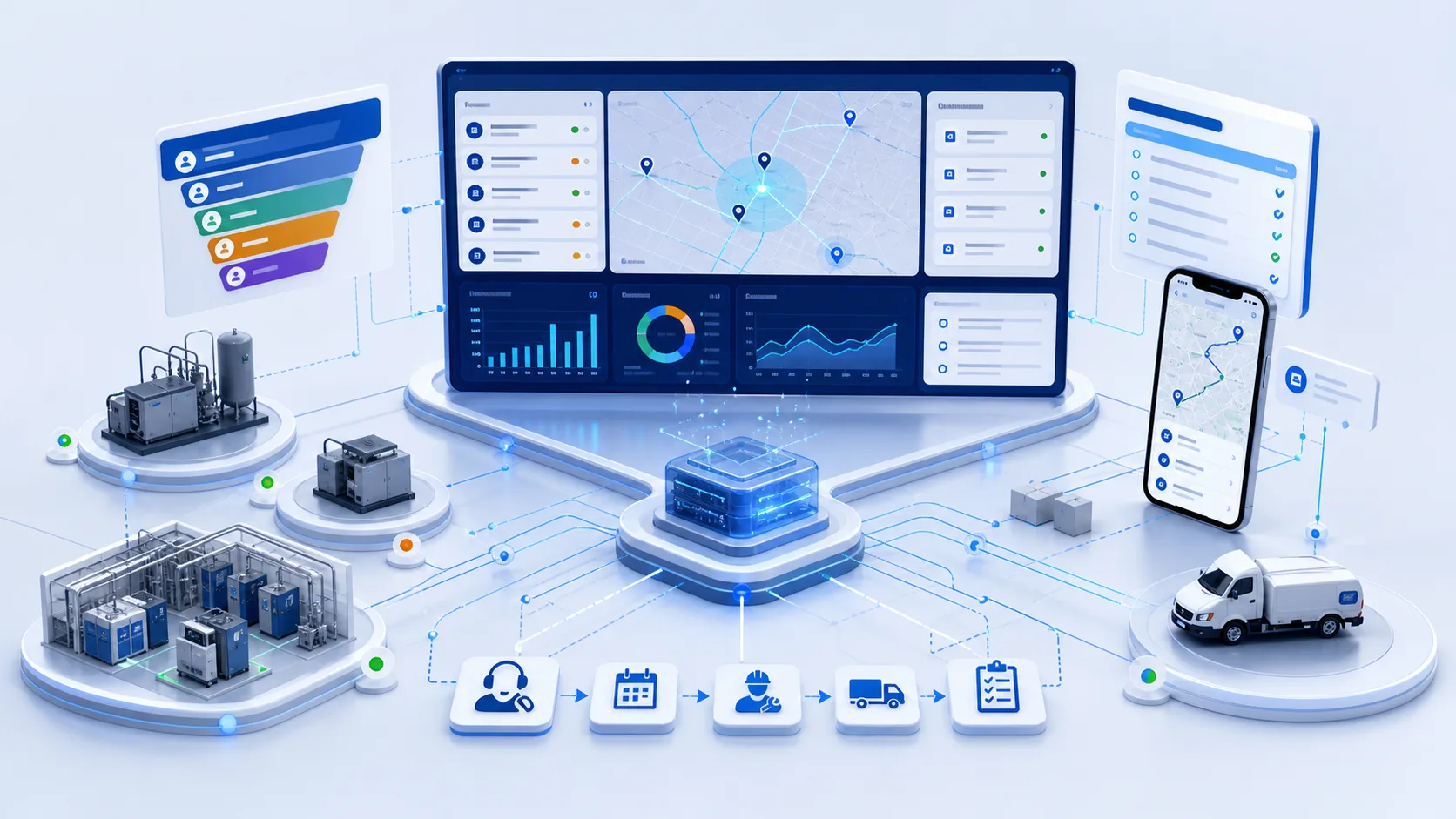
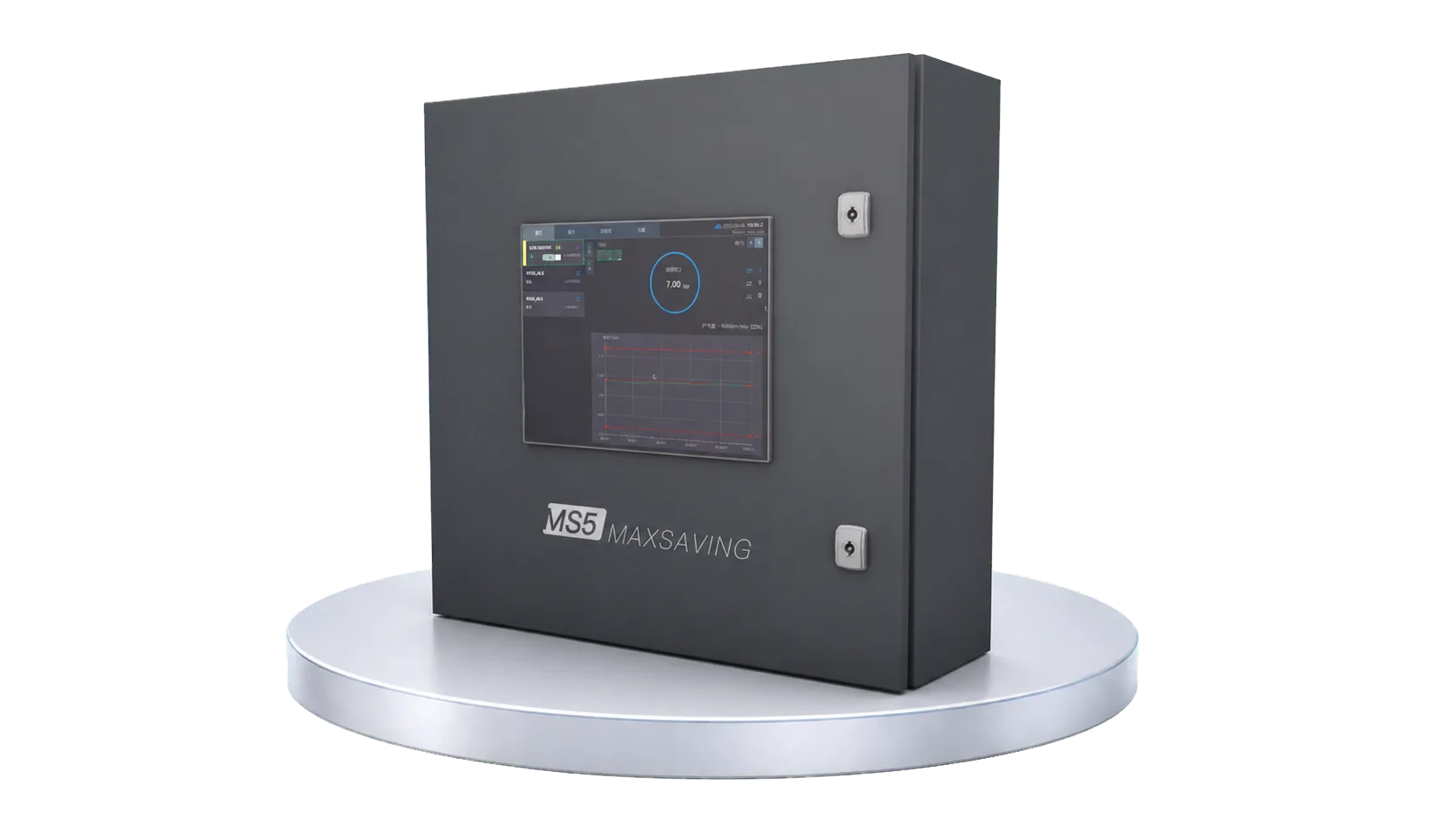
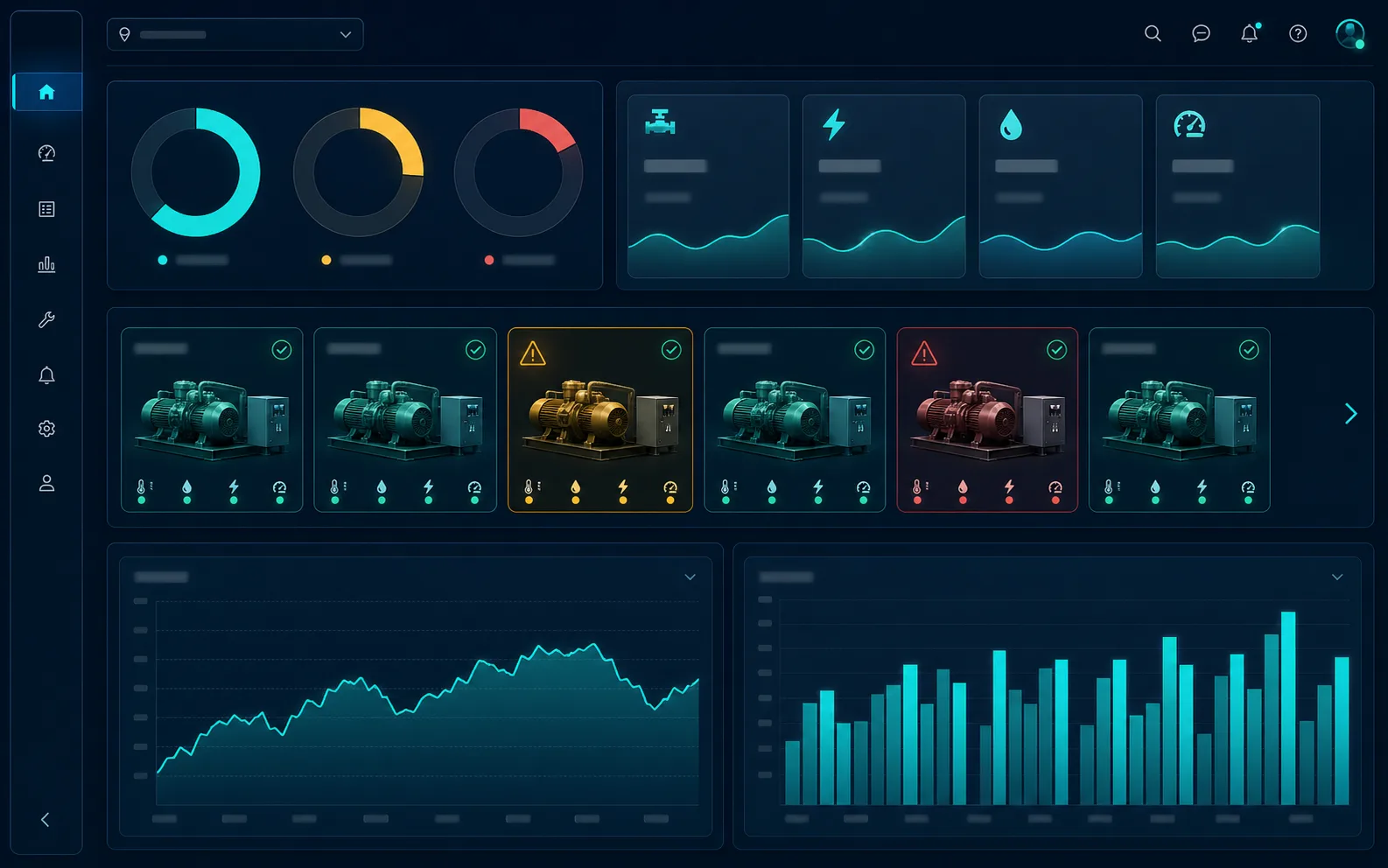
Hardware and software as one: MS master control + CompView platform
Hardware handles on-site acquisition and real-time control; software handles data analytics and global optimization. CompView supports cloud and on-premises deployment — the cloud is ready out of the box with remote O&M anywhere, while on-premises runs fully offline, with data never leaving the plant — secure and under your control.
① Industry statistics and trends are drawn from the U.S. Department of Energy (DOE), ISO 50001-related public research, and industry sources. They illustrate the general industry direction, not commitments for specific projects; actual results for any station depend on on-site measurement.
② Overall energy savings are a typical estimated range for master control plus AI optimization, not a guaranteed figure; actual results depend on on-site measurement. Other figures come from business records and public research.
③ The forecast horizon is illustrative of typical capability; the actual window depends on accumulated station data and air demand patterns.
How much energy could your station still save?
Leave your contact details and our engineers will use your station's actual operating data to provide sizing advice and an energy savings assessment.