

Small stations
One MS,the whole station under control
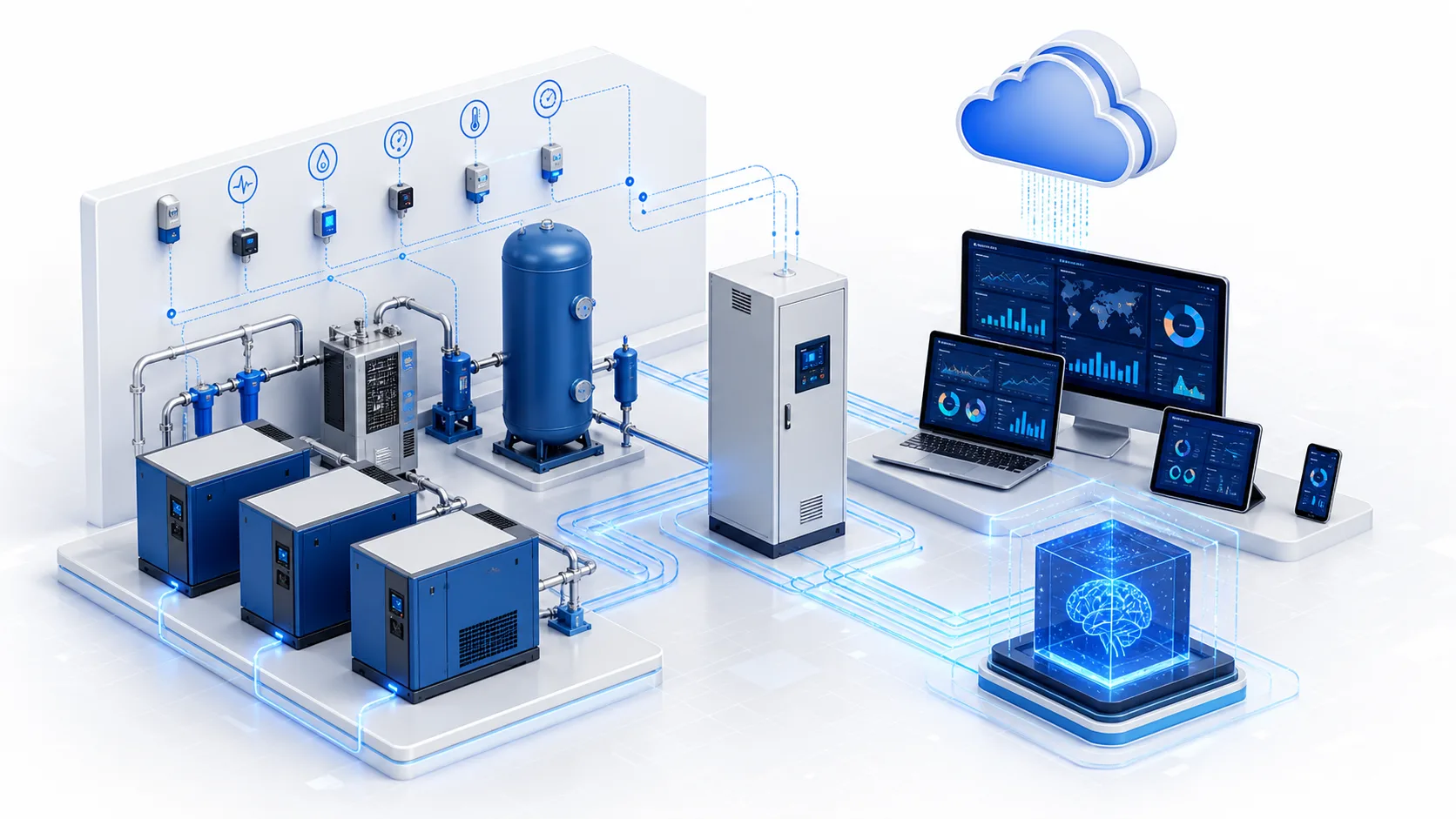
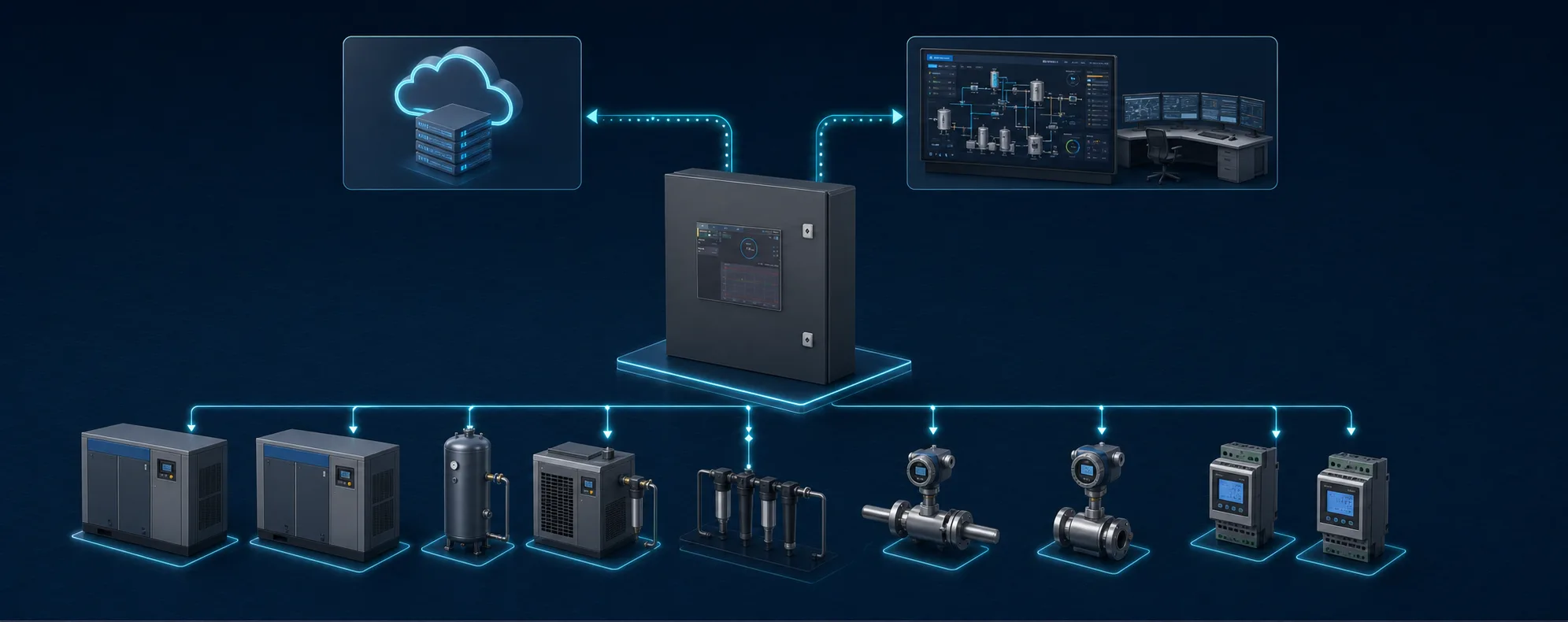
MS1, MS3 and MS5 cover compressed air stations from small to large. One on-site system handles energy-saving dispatch, equipment protection and remote monitoring, with data streamed to the cloud in real time.
- Up to 16 air compressors + 32 air dryers
- MAX-SAVING intelligent energy-saving algorithm
- Automatic recovery from power and network outages
 MS1
 MS3
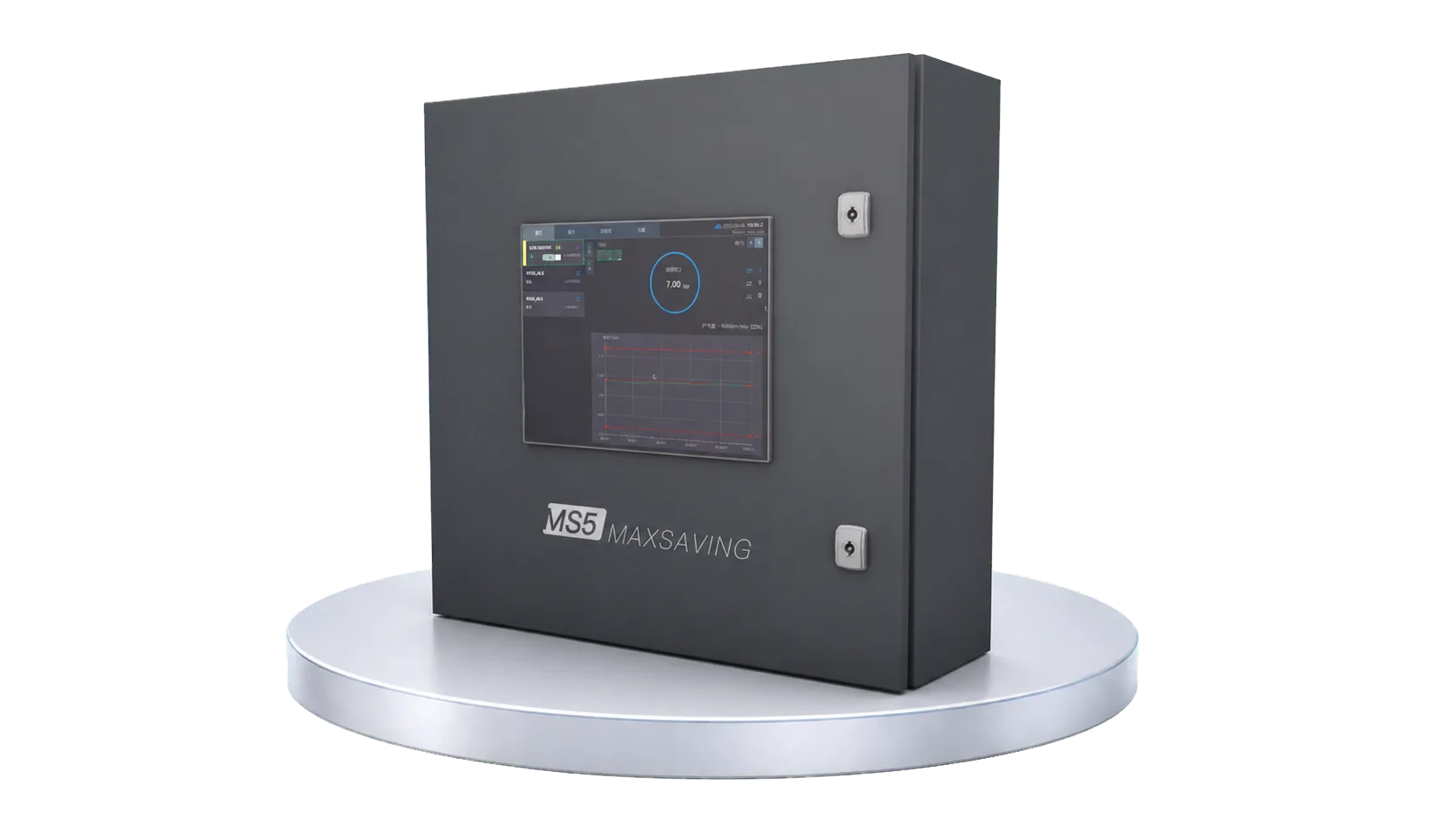 MS5
16+32
MS5 maximum control capacity (compressors + dryers)
3modes
Control modes
Sequenced start/stop / balanced hours / energy optimization
−7%
Energy saved per 1 bar reduction in system pressure
±200h
Settable running-hour spread between units, overhauls kept in sync
Savings · Stability · Intelligence
 01 · Savings — continuous energy savings
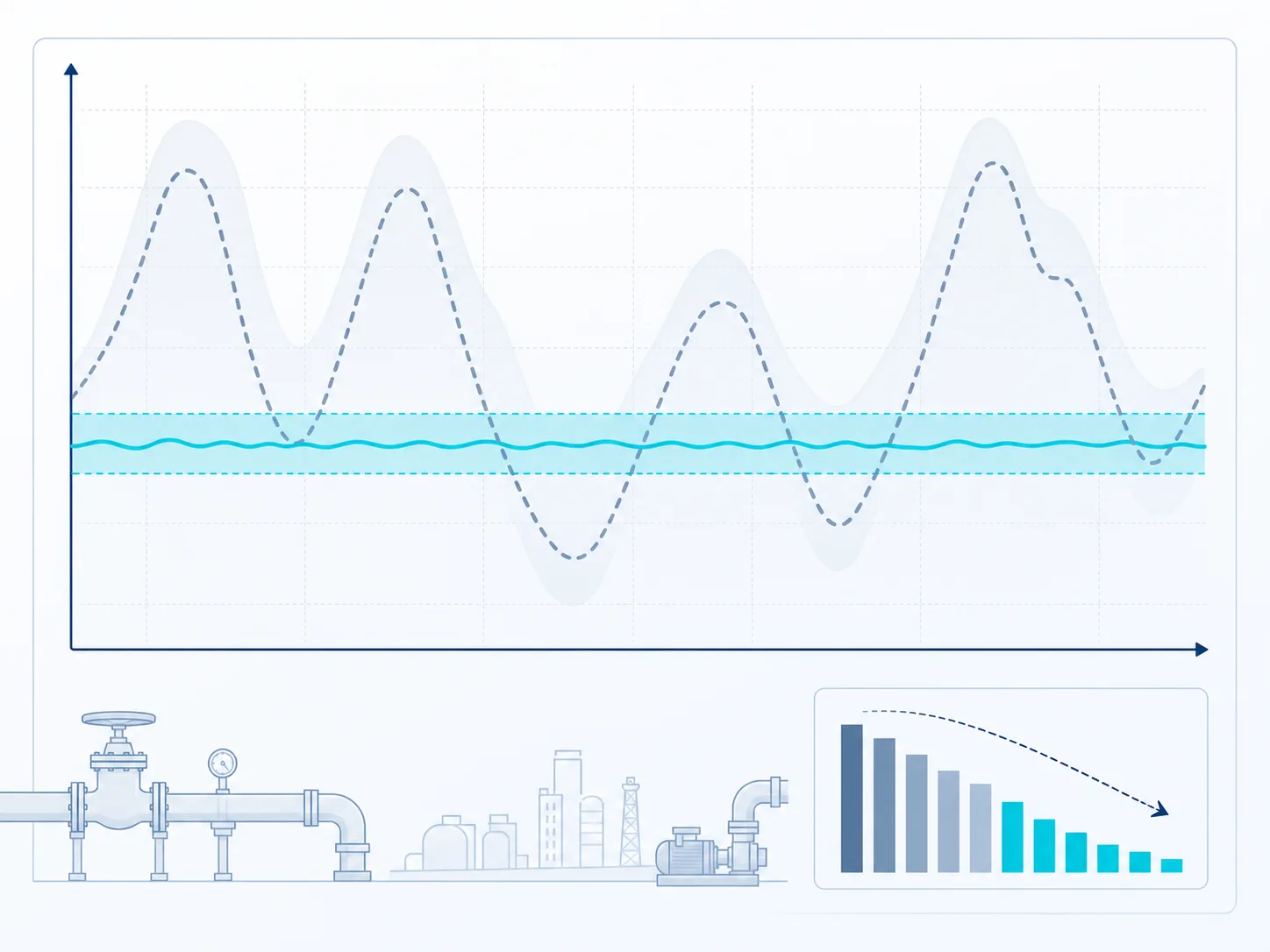
Every 1 bar of pressure reduction cuts energy use by about 7%
The MAX-SAVING narrow-band control algorithm picks the right unit mix for actual air demand and acts ahead of time, holding system pressure in a narrower, lower band — when 2 units are enough, it never runs 3 idling at low frequency.
- ·Coordinated speed regulation — MS5 jointly optimizes the frequency ranges of up to 16 VSD units.
- ·Centrifugal and screw coordination — allocates load dynamically to reduce centrifugal blow-off losses.
- ·Periodic cloud optimization — regularly recalculates a better unit mix and corrects pressure imbalance between units.
 02 · Stability — triple protection
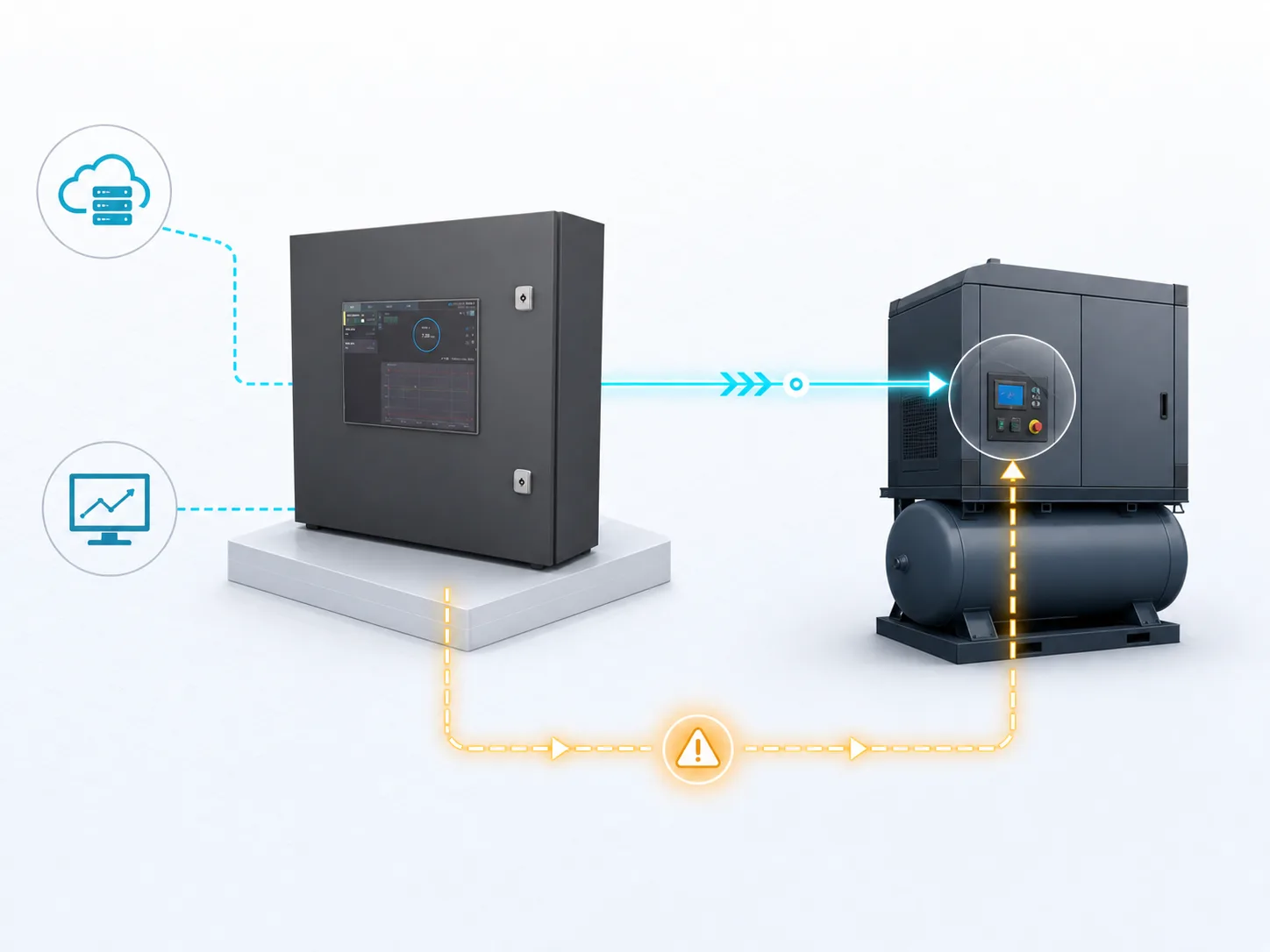
On any fault, control goes back first
The moment anything goes wrong, the system hands control back to each compressor — even if the MS unit itself fails, compressors immediately fall back to their local control logic and keep running as usual. Every event is fully logged and traceable.
- ·Dual pressure sensor cross-check — if either sensor fails, or the two readings diverge beyond limits, an early warning fires and control falls back at once.
- ·Automatic outage recovery — resumes operation automatically after power or communication interruptions.
- ·Hardware watchdog — automatic restart on system failure, with alarms and faults pushed to your phone.
 03 · Intelligence — visible and connected
See the whole station, from anywhere
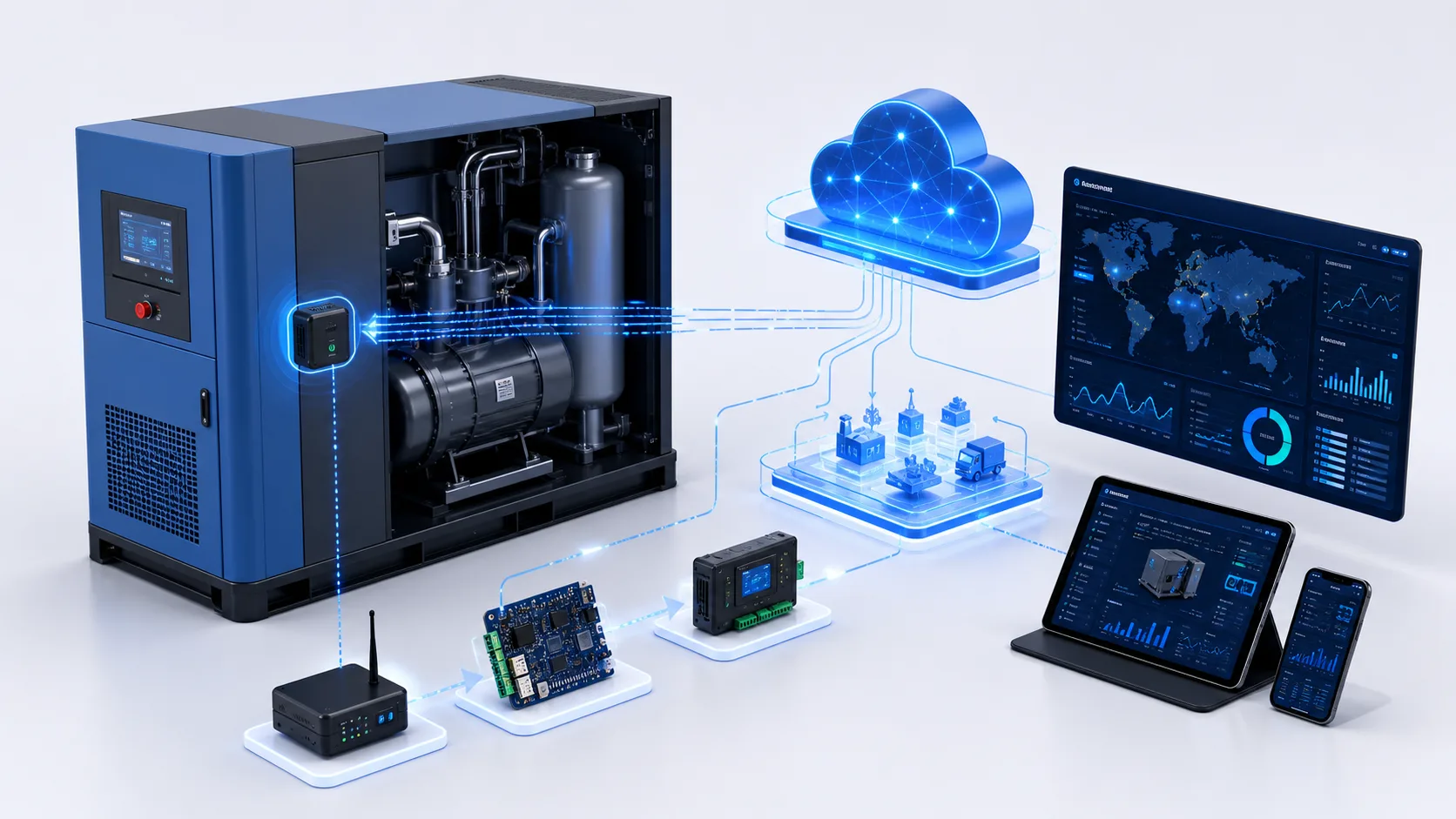
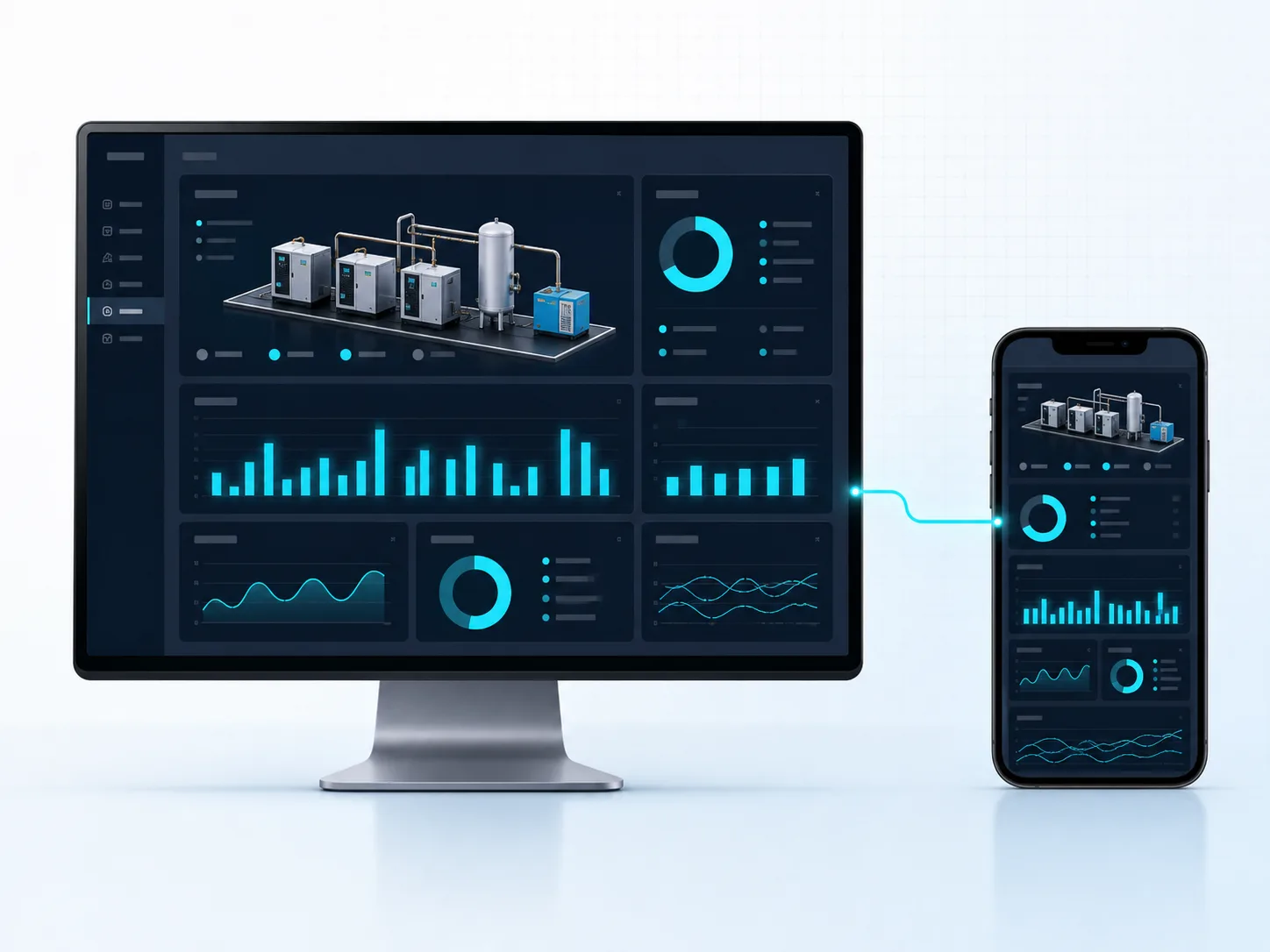
Operating data syncs to the cloud for monitoring on desktop or mobile anytime; fault and maintenance alerts are pushed proactively. Standard protocols connect straight to factory systems and scale as you need.
- ·Direct Modbus / OPC-UA — connects to factory SCADA / MES over RS485 or Ethernet.
- ·No reprogramming when compressors change — reconfigure in the back end and go live.
- ·Remote O&M and upgrades — most issues resolved through remote diagnostics; features and algorithms updated online.
Three control modes, one dispatch algorithm
1
Sequenced start/stop
Brings units in and out by preset priority — suited to stations with steady demand.
2
Balanced running hours
Set a maximum running-hour spread between units (e.g. ±200 hours) and MS rotates them automatically, keeping wear even and overhaul cycles in sync.
3MAX-SAVING
Energy optimization
Narrow-band control plus cloud optimization picks a more efficient unit mix and VSD ranges for actual air demand — effective from day one.
MS is the on-site brain of the station
Collect data once, stack value three layers deep — MS delivers stable savings on site, CompView handles cloud visualization and reporting, and CompAI forecasts air demand and keeps surfacing savings opportunities. Explore the Smart Compressed Air Station →
Three models, sized to your station
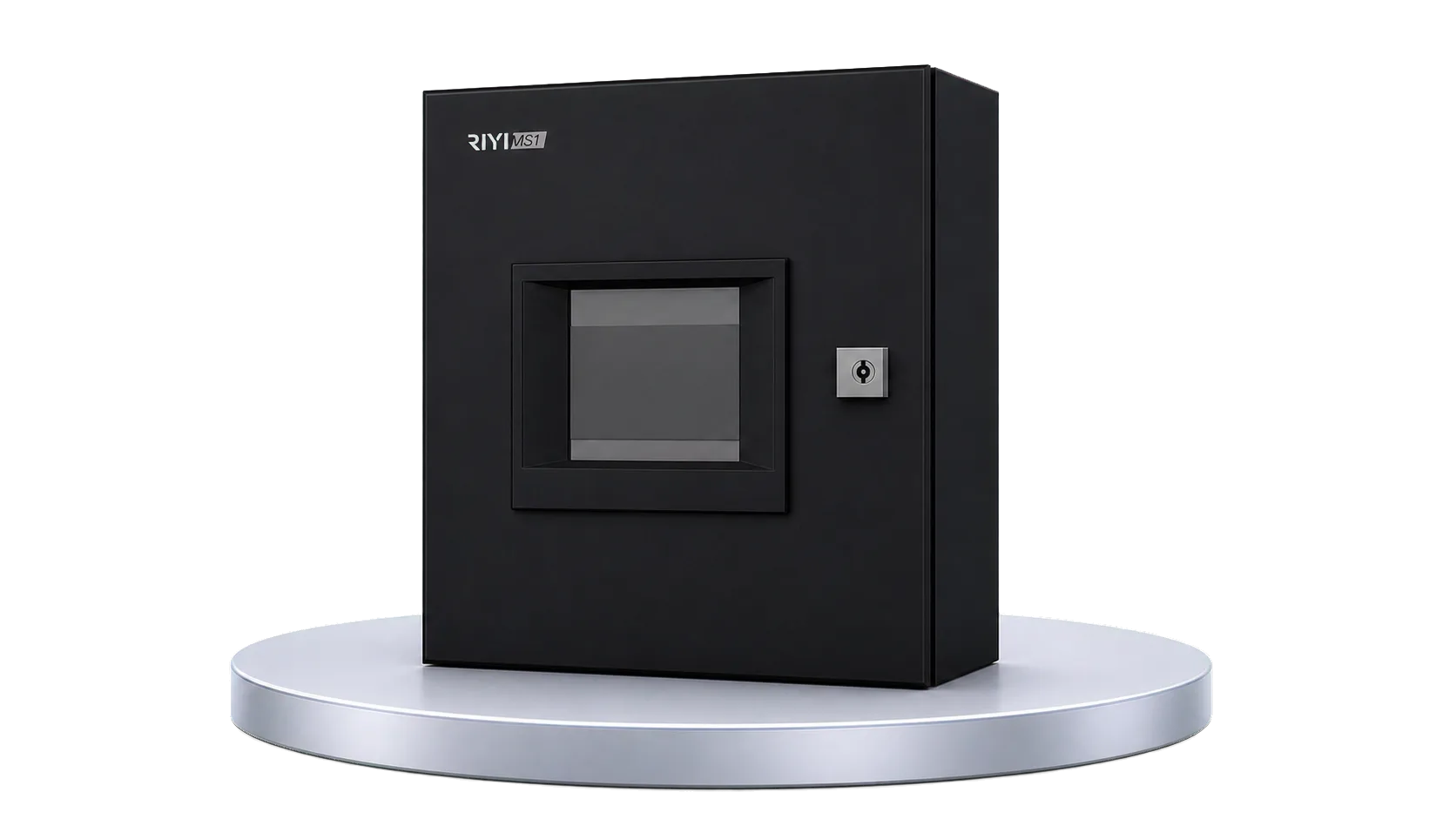
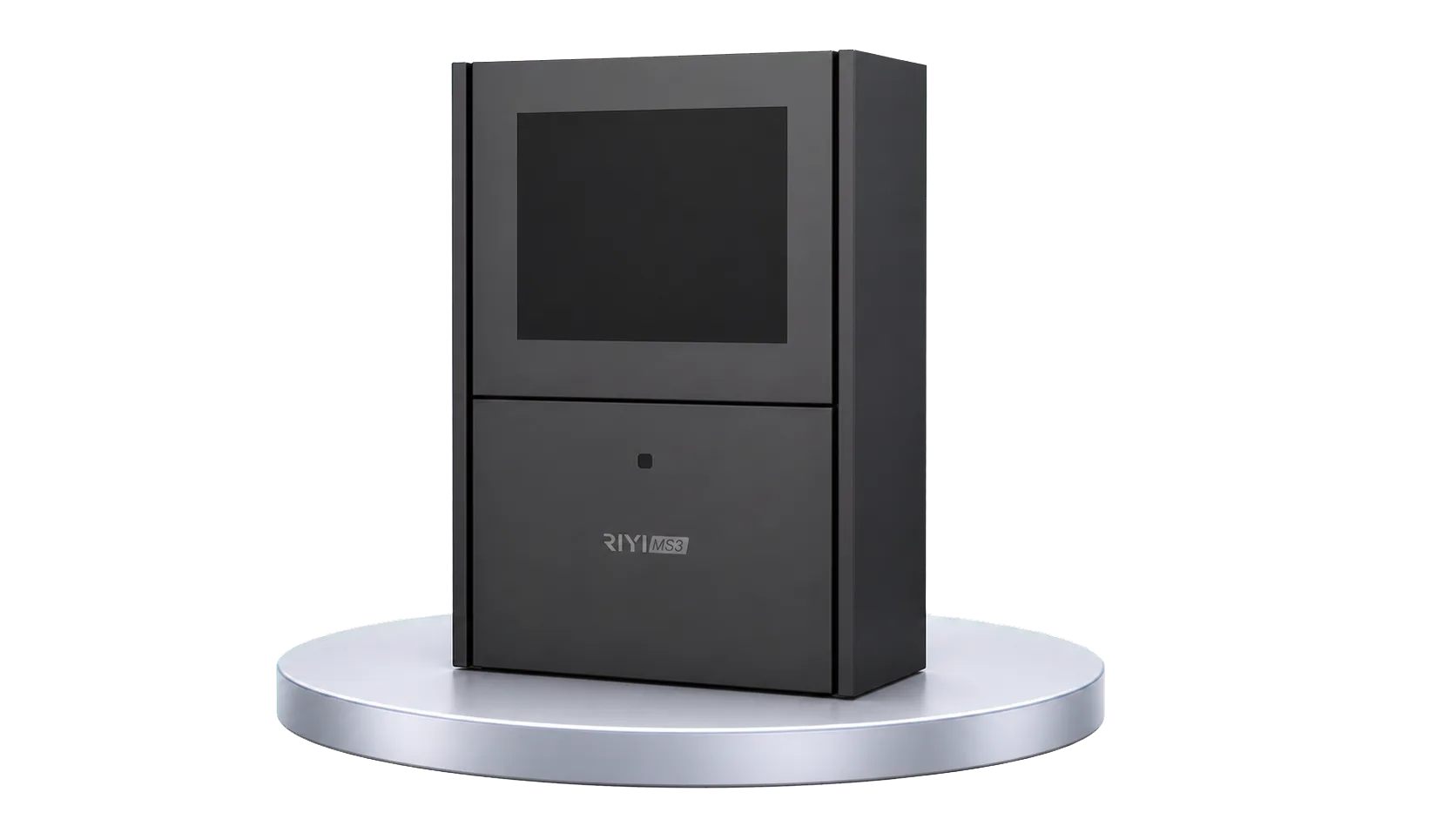
| Specification | MS1Small stations | MS3Small–medium · workhorse | MS5Large · flagship |
|---|---|---|---|
| Touchscreen | 7-inch 800×480 | 12-inch 1024×768 | 12-inch 1024×768 |
| Control capacity | 4 compressors + 8 dryers | Per sizing assessment | 16 compressors + 32 dryers · 16 VSD units |
| Control modes | Sequenced start/stop / balanced hours | Sequenced start/stop / balanced hours | 3 modes + MAX-SAVING |
| Architecture / storage | Embedded Linux / 16G | Embedded Linux / 64G | x86 Linux / 128 GB (over 1 month local retention) |
| Interfaces | 2×CAN, 3×RS485, 2×RS232 | 2×CAN, 4×RS485, 2×RS232 | 2×CAN, 4×RS485, 1×RS232 · expandable AI/DI/DO |
| Connectivity | 4G + 2×Ethernet | 4G + 1×Ethernet | 4G + 2×Ethernet |
| Protocols | Modbus RTU / OPC-UA | Modbus / OPC-UA | Modbus protocol stack |
| Dimensions mm | 370×350×165 | 520×380×210 | 550×500×210 |
| Power supply / consumption | 220V / 75W(max) | 220V / 60W(max) | 220V / 20W(max) |
Beyond the site, a full software suite
Data collected by MS flows into the CompView Cloud Platform — data dashboards, configurable big-screen displays, energy efficiency reports and account permissions in one place; the companion WeChat official account and mini program put live monitoring, alarm push and online repair requests in your pocket.
Data dashboards Big-screen displays Energy reports Account permissions Mobile mini program
By industry: what MS solves

Electronics & semiconductor
Supply pressure fluctuation hits yield directly.
Narrow-band control locks fluctuation into the smallest range, with dual sensors cross-checking and early warning on sudden pressure drops.

Automotive parts
Three-shift continuous production, uneven equipment wear.
Balanced-hours dispatch keeps running hours nearly identical — overhauls stay in sync and spare parts stay plannable.

Food & beverage
Air demand swings sharply with production batches.
Stages units up and down quickly with batch demand, avoiding several units idling at low frequency; dew point can be brought into monitoring.
Textiles & fibers
Heavy energy users, sensitive to power costs.
With a large power baseline, lower pressure bands and unit-mix optimization show up most clearly on the electricity bill.
Which MS fits your station?
Tell us your compressor count and air demand pattern — our engineers will give you a free sizing and savings assessment.