
Online from the factory is only the first step
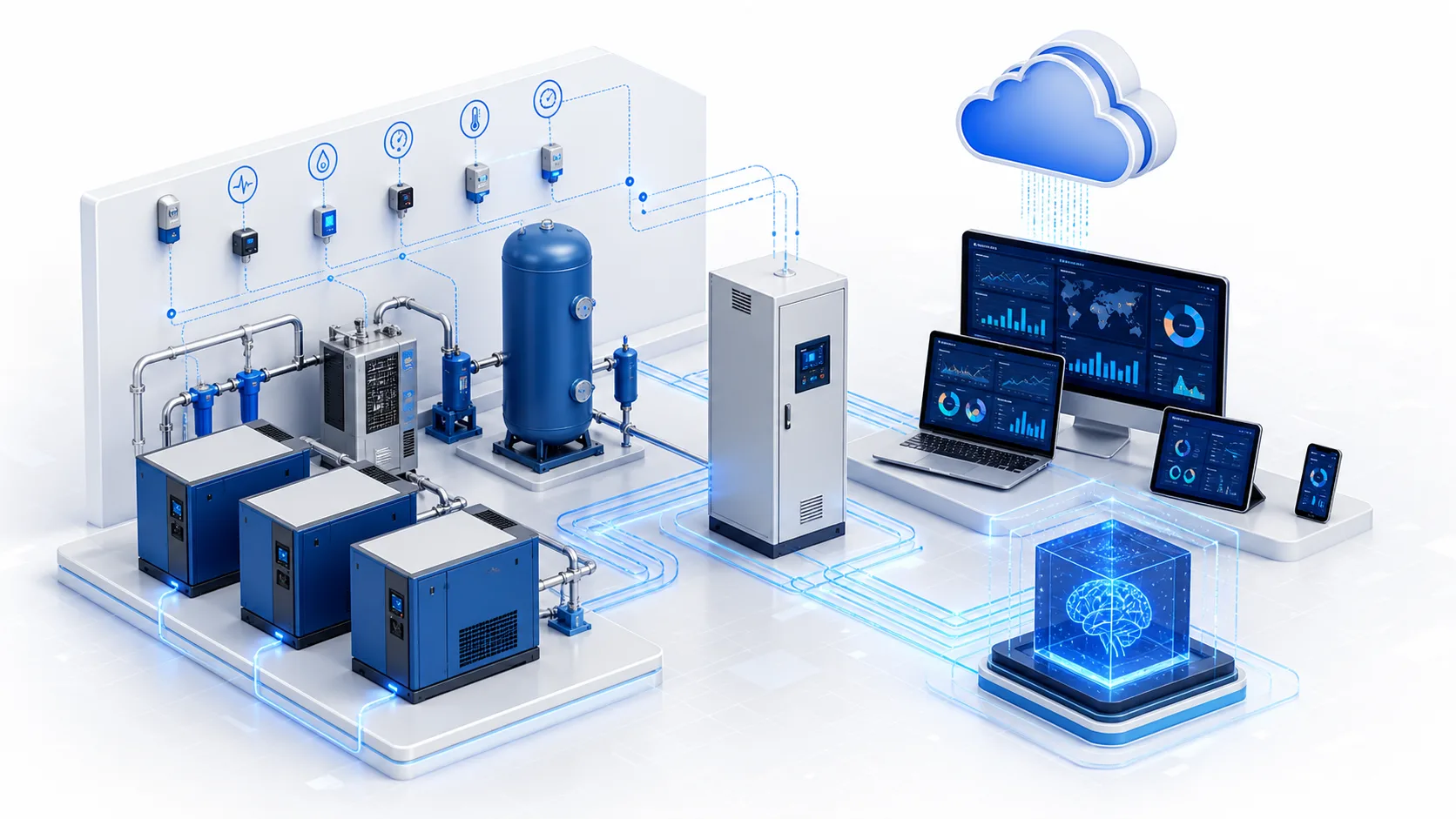
Mbox for the installed base, AIRKore for new units — connectivity is just the foundation. The real moat is real operating data accumulated over the long run: fueling failure prediction, energy-efficiency optimization, and higher availability.
After delivery, equipment enters the OEM's biggest blind spot
Compressor packages are increasingly commoditized, and price competition keeps squeezing hardware margins. Real differentiation and sustainable profit lie in the long operating phase after delivery — precisely where OEMs cannot see. More critically, the real operating data equipment produces every day can never be recovered once it goes uncollected.
Estimated global annual cost of unplanned industrial downtime
Average per factory, double the 2020 figure

of manufacturers now rank predictive maintenance as a priority
Sources: Deloitte, McKinsey, Siemens, and public industry research; figures illustrate broad industry trends, not specific commitments.
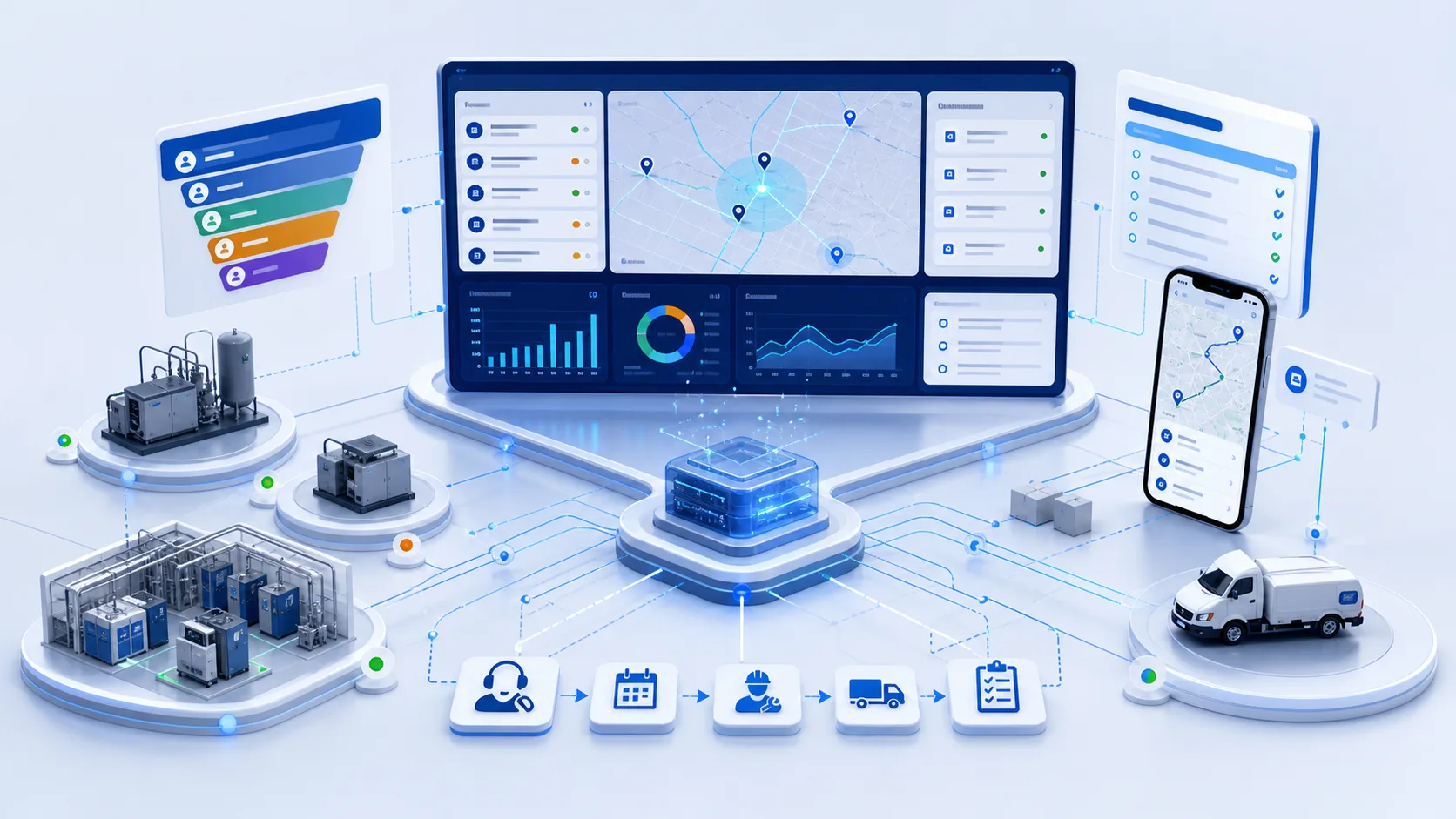
No view of the installed base
Equipment is scattered across regions and customers, with no unified view of location, configuration, or operating status.
Operating data stays on site
Real operating conditions and failure records stay with the customer; without first-hand data, the OEM has nothing to accumulate.
After-sales stays reactive
Faults are described over the phone; without live data and history curves, the cause often stays unknown until someone reaches the site.
No way to quantify improvement
Without long-term operating data there is no baseline for availability, failure rate, or energy efficiency — improvement runs on experience alone.
IoT is the foundation, data is the asset, outcomes are the output
Getting equipment online only lays the foundation. Over long-term operation, equipment keeps depositing data; cleaned and modeled, that data becomes a traceable asset — and the asset converts into real improvements in availability, energy efficiency, and failure rate.
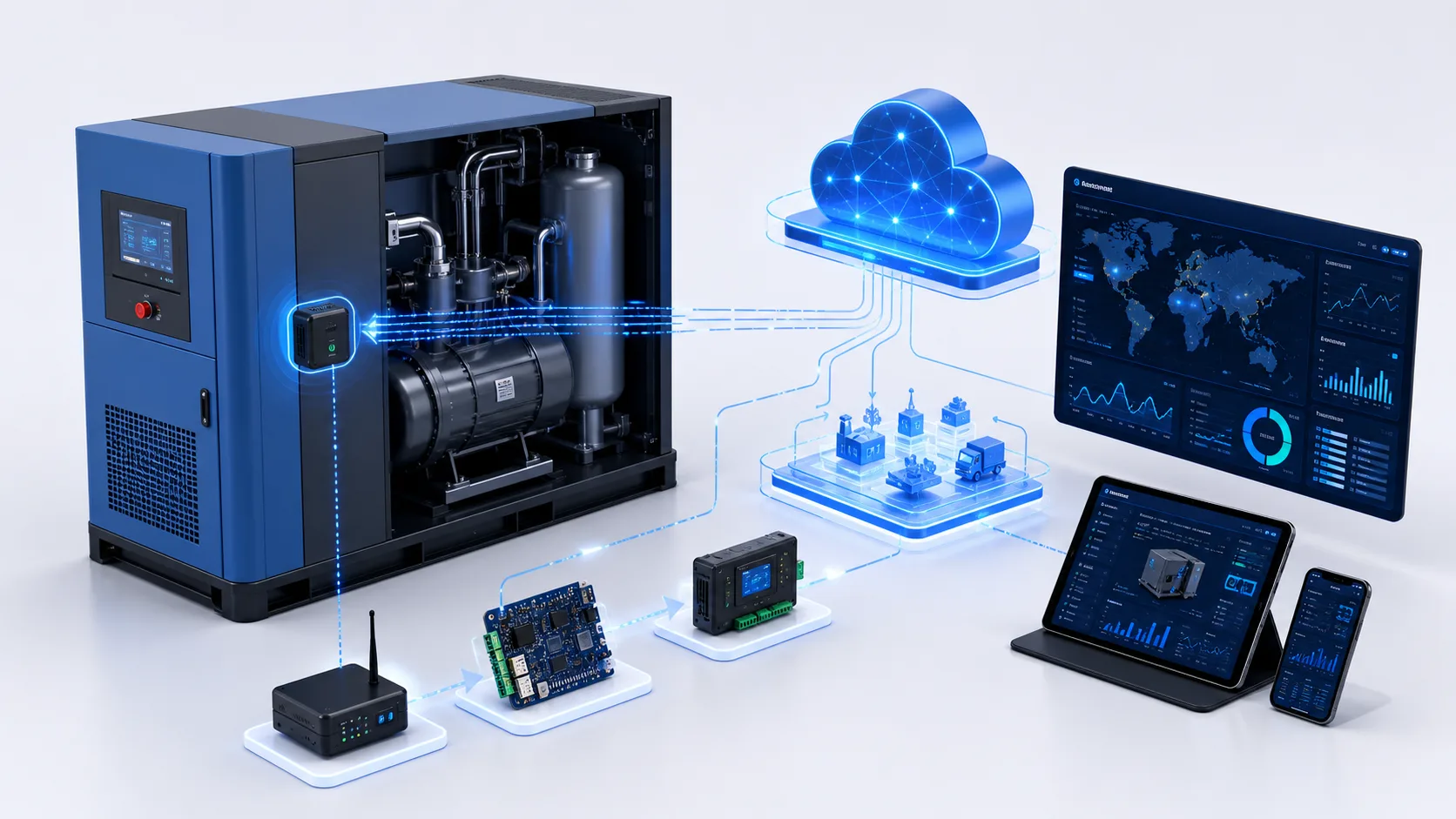
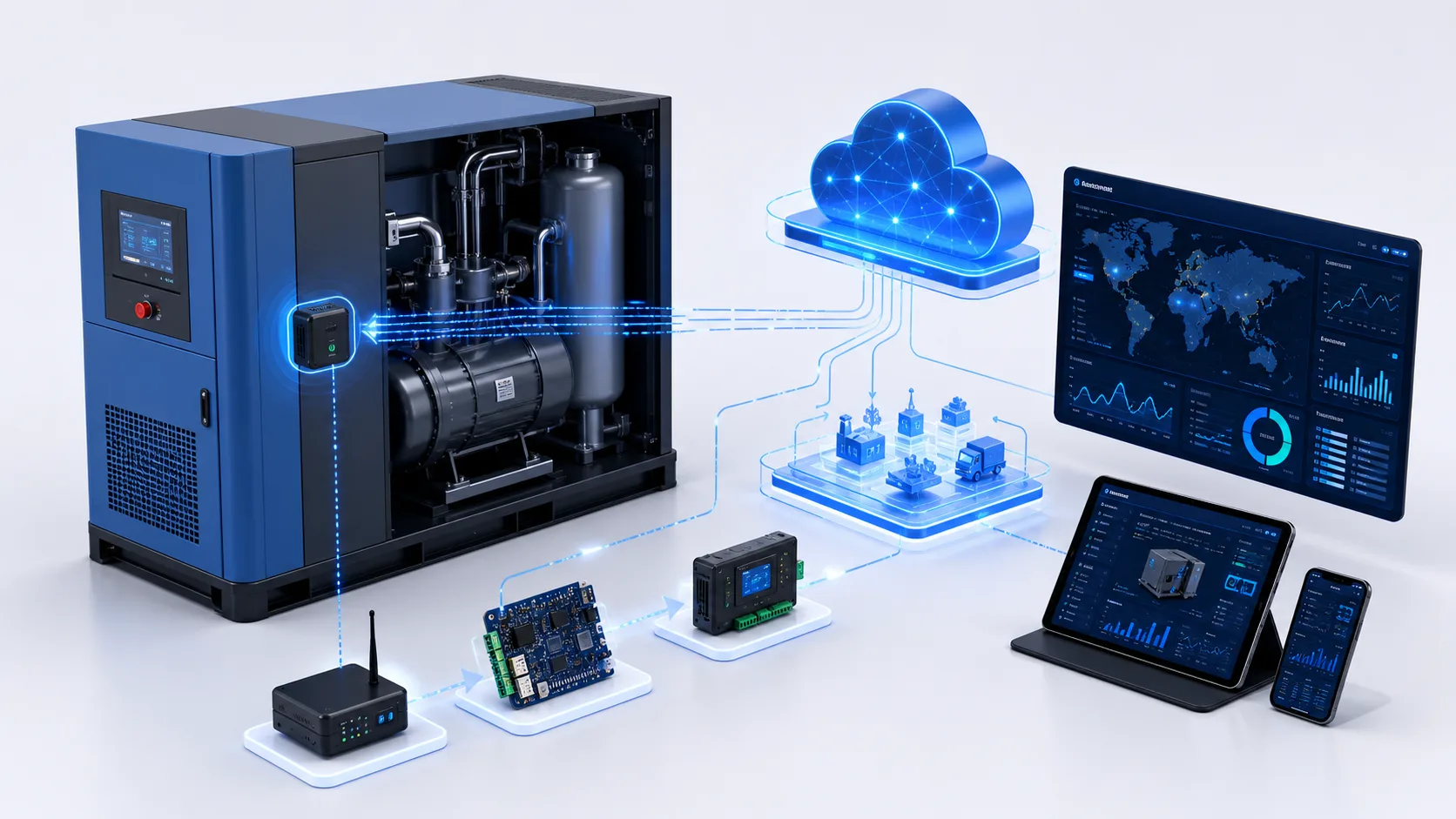
Mbox for the installed base, AIRKore for new units — online from the factory
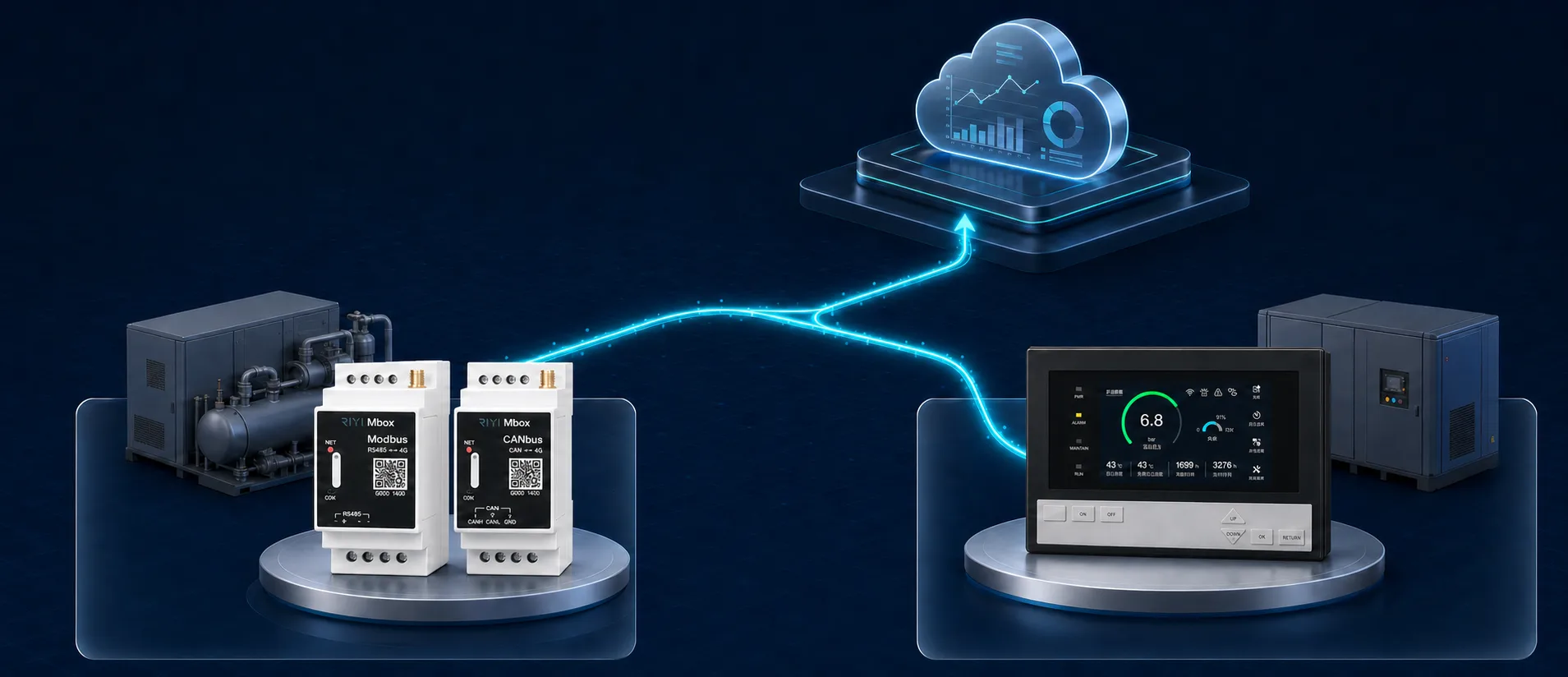
Mbox for the installed base
Without replacing the existing controller, it collects operating parameters at the machine, converts protocols, and uplinks to the cloud — bringing already-delivered units online.
AIRKore built into new units
Package control, status acquisition, and remote service integrated on a single controller board — new units ship online with no external gateway.
One unified data model
Both paths follow the same data model into the same platform, with profiles created at the factory — no split between old and new equipment.
The IoT base answers one question: can you get the data. It is the necessary foundation, not the destination — the real value sits one layer up.
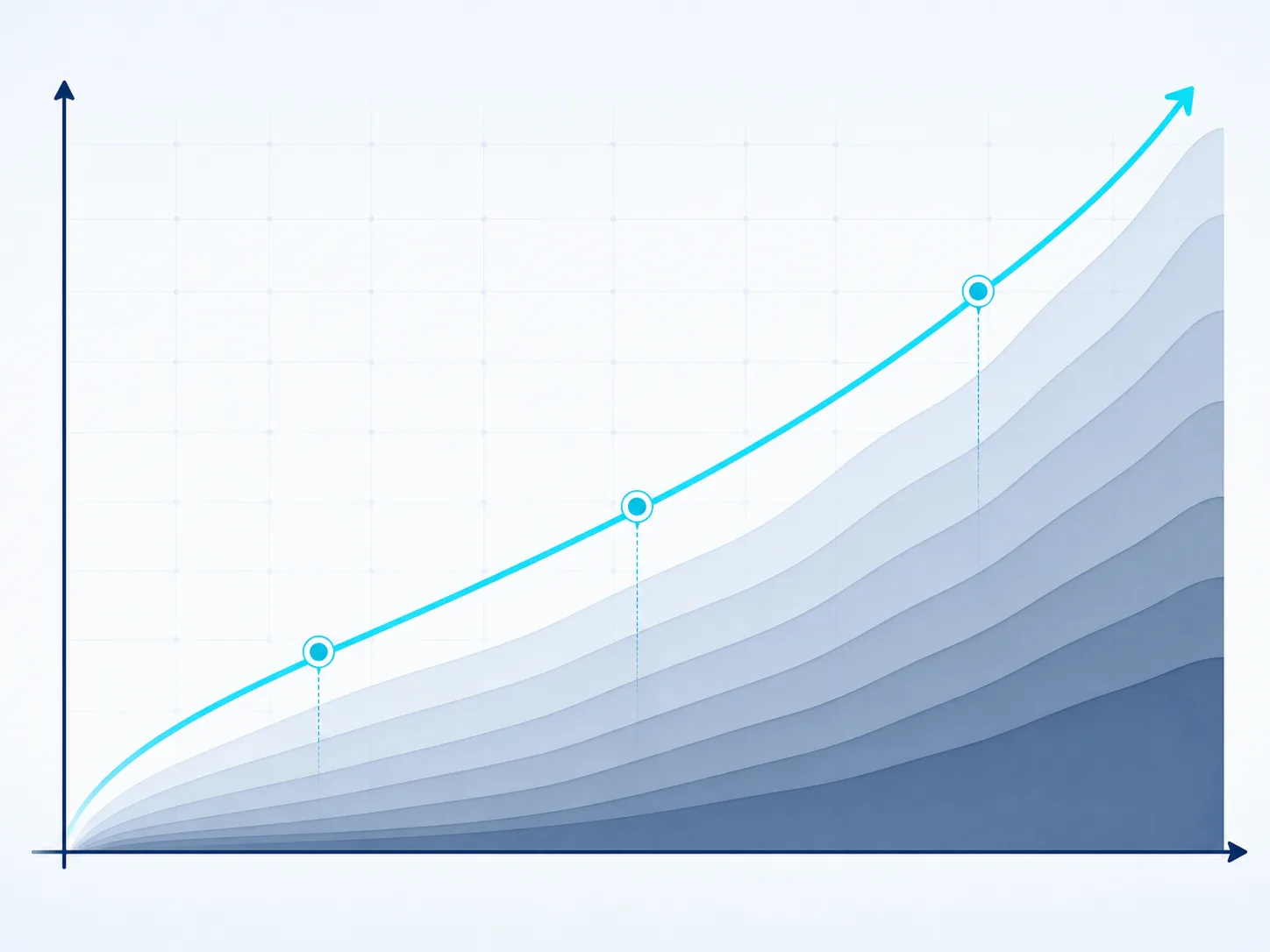
Data value compounds with running hours and installed base
One machine's data on one day is just an isolated point. Pool thousands of units of the same model running continuously for years, and you can draw the boundary between normal and abnormal, establish energy-efficiency baselines, and extrapolate component degradation trends. This dataset keeps thickening with time and installed base — an asset no competitor can replicate overnight.
Start/stop and load/unload records, discharge pressure and temperature, motor current, oil temperature and pressure, running hours, alarm and fault events, energy consumption and specific power.
A reliable baseline must cover different seasons, shifts, and loads; degradation is a slow process, and only continuous data can capture the trend and separate normal fluctuation from real anomalies.
The larger the installed base, the richer the same-model comparison samples — models get more accurate with fewer false alarms. The data asset reinforces itself as the fleet grows.
Turn the data asset into real gains in availability, failure rate, and energy efficiency
Data only creates real value for the OEM and the end customer once it improves equipment metrics. That is the output of the data asset — three measurable equipment outcomes.
Higher availability
MTBF ↑ · MTTR ↓Faults are handled before they turn into downtime and overhauls stay on schedule; diagnosing remotely first and arriving with the right parts also cuts mean time to repair.
Lower failure rate
Early warningFleet-wide same-model comparison pinpoints weak components and common root causes, making each generation of machines more reliable.
Energy-efficiency gains
Specific power ↓Identify units drifting off the baseline, then guide on-site tuning and energy retrofits — efficiency improves continuously, with the data to prove it.
Four engines that make these outcomes possible
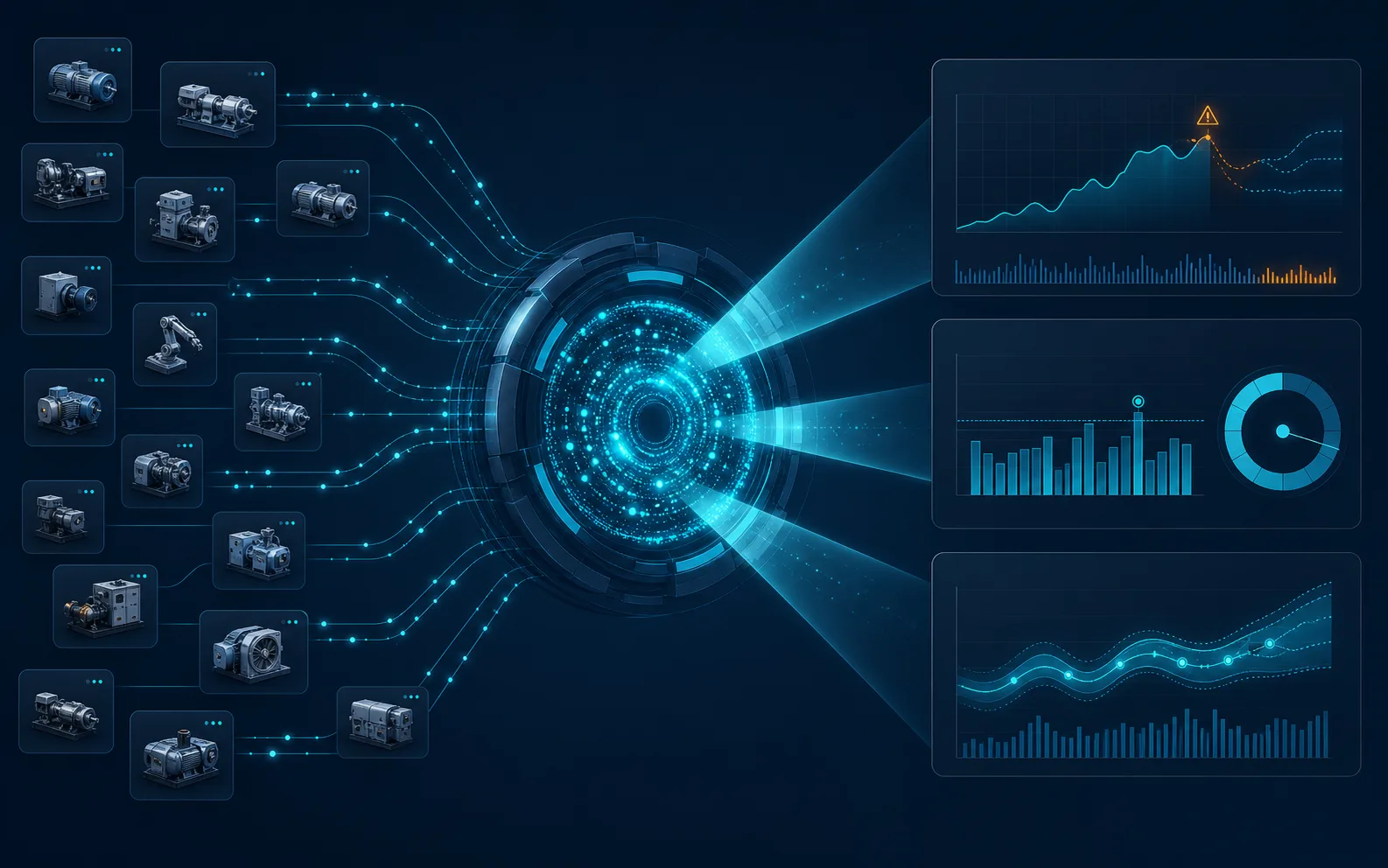
CompAI, RIYI's AI analytics engine, runs four model families on top of the data asset, turning accumulation into decisions — the larger the fleet and the longer it runs, the sharper all four engines get.
Spots abnormal fluctuations and high-risk units, raising warnings before faults escalate.
Builds same-model efficiency baselines to locate drift and savings potential.
Feeds real operating data back into design to improve structures and control strategies.
Anticipates service and spare-part needs from maintenance cycles and risk signals.
From selling equipment to operating its entire lifecycle
Once availability, failure rate, and energy efficiency become measurable and contractable, they are no longer just customer benefits — they become service products you can price. The installed base shifts from stock that ends at delivery to an operating asset that keeps generating service revenue.
Typical range for connectivity plus predictive maintenance
Condition-based service replaces scheduled over-maintenance
Early intervention reduces consequential damage
Cross-region installed base viewable and controllable anytime
* Downtime, cost, and lifetime figures are typical industry ranges for connectivity combined with predictive maintenance (sources: McKinsey, Deloitte, and public research); they are not guarantees, and actual results depend on the project.
Climb the ladder on your installed base
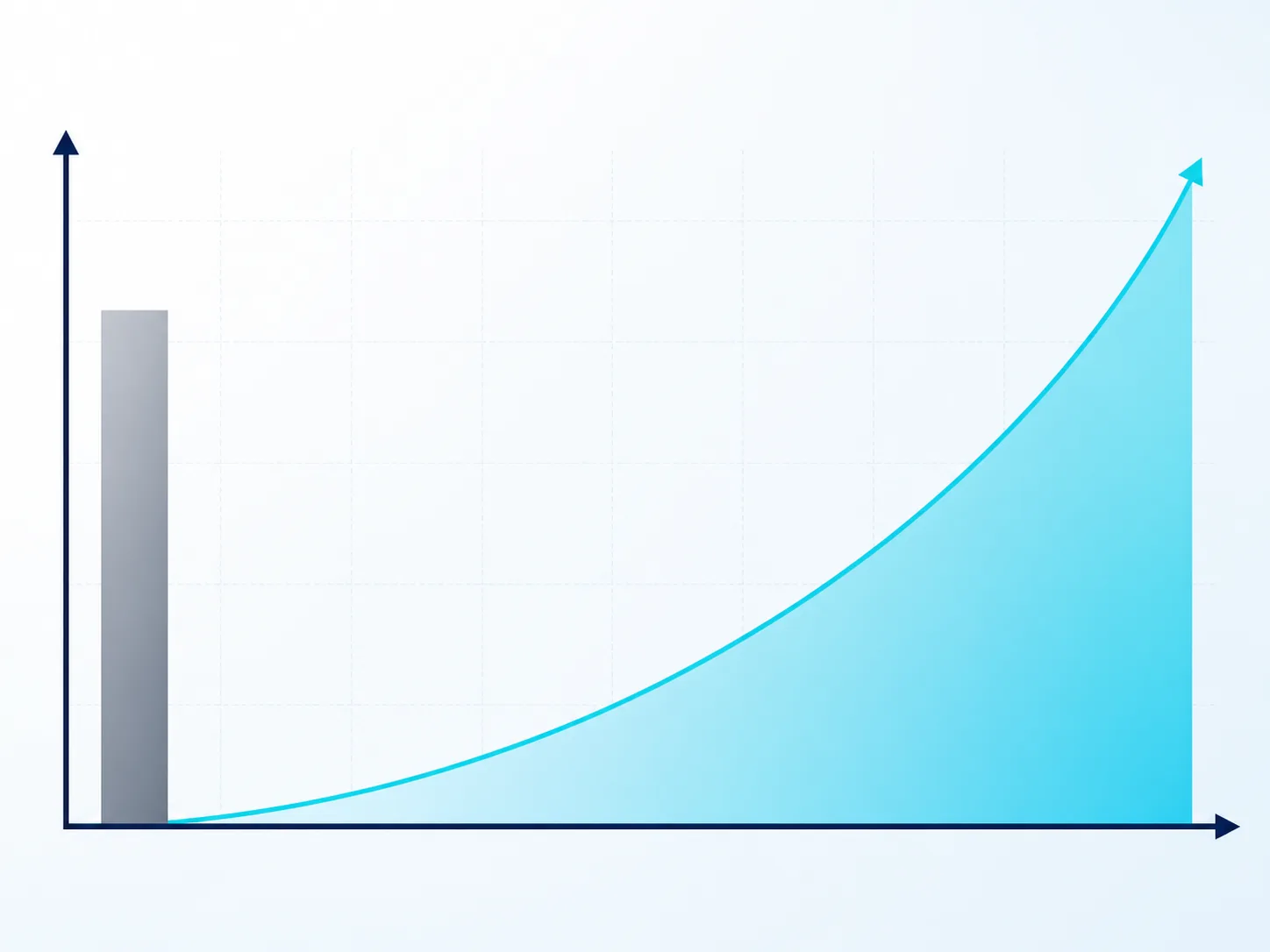
With the IoT base and data asset in place, the revenue model can evolve in stages — from one-time equipment sales, to recurring service revenue, to outcome-based contracts. Each rung builds on the data capability of the one below.
Equipment sales bundled with warranty and remote monitoring — every package ships with connectivity as a selling point.
Predictive maintenance, parts subscriptions, and managed energy savings build recurring service revenue.
Contract on availability or air consumption, delivering outcomes rather than equipment — underwritten by long-term data.
Start with the IoT base and grow your installed base into a data asset
We map the path to equipment connectivity, data accumulation, AI analytics, and platform rollout around your product lines, current controllers, and service network.